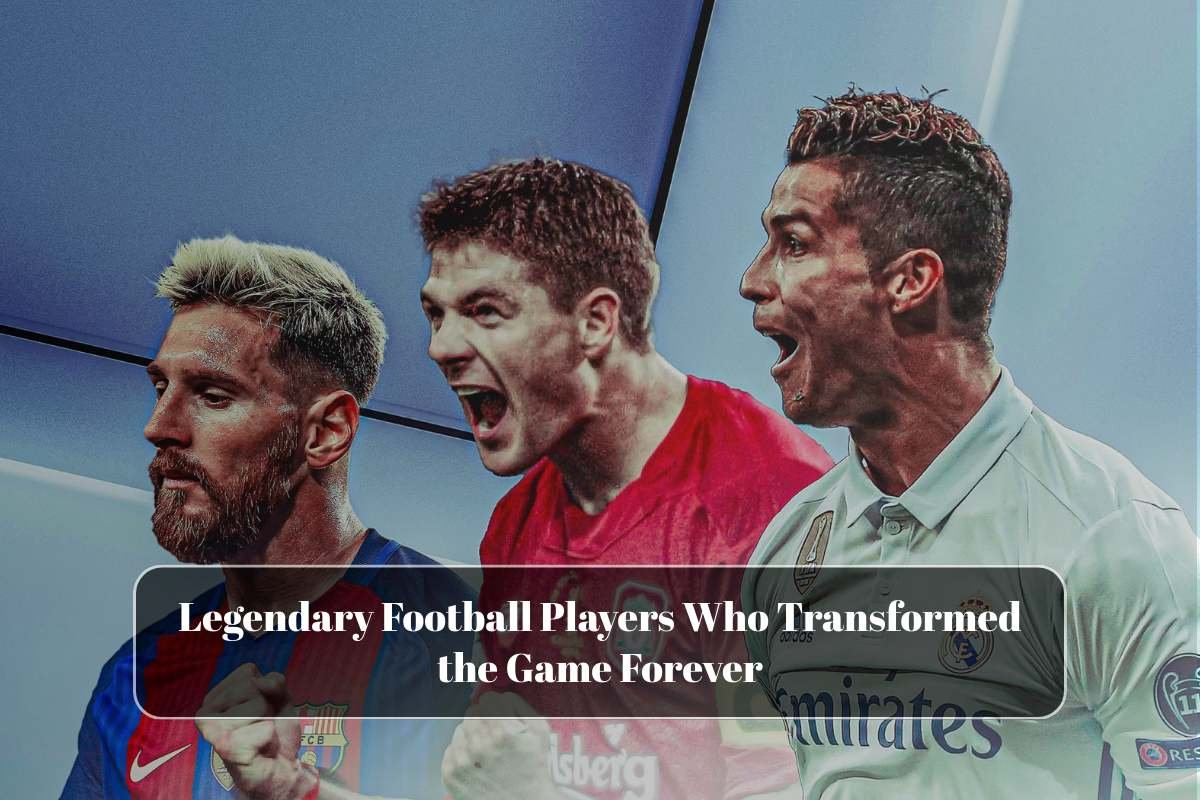
Football is a sport rich in history, filled with iconic players who have left an indelible mark on the game. These players not only showcased extraordinary skill and talent but also transformed the way the game is played, the strategies used, and the culture surrounding football. From redefining positions to inspiring generations, these legendary players have elevated the sport to new heights. Here, we look at some of the most influential figures in football history who changed the game forever.
1. Pele: The King of Football
No conversation about legendary football players would be complete without mentioning Pele. Widely regarded as one of the greatest footballers of all time, Pele’s influence on the game transcends his dazzling skills. His incredible agility, dribbling, and goal-scoring ability redefined the forward position.
Pele’s impact on football began at a young age. At just 17, he won his first World Cup with Brazil in 1958, becoming the youngest player to ever do so. His creativity on the field, coupled with his ability to score from virtually any position, changed how forwards were viewed in the sport. Pele’s performances on the international stage helped bring global attention to football, and his legacy continues to influence players today.
2. Diego Maradona: The Master of the Dribble
Diego Maradona’s career was filled with unforgettable moments, none more famous than his performances during the 1986 World Cup, where he led Argentina to victory. Known for his vision, creativity, and dribbling skills, Maradona redefined what it meant to be a playmaker in football. His “Hand of God” goal and the “Goal of the Century” against England in the quarterfinals of the 1986 World Cup remain two of the most iconic moments in football history.
Maradona’s dribbling skills, which allowed him to weave through multiple defenders with ease, set a new standard for attacking players. He was not only a goal scorer but also a creator, constantly linking play and assisting teammates in critical moments. His ability to dominate the midfield and control the pace of the game made him a revolutionary figure in the sport.
3. Lionel Messi: The Modern Magician
No one has done more to modernize the attacking midfielder/forward position than Lionel Messi. Known for his low center of gravity, quick dribbling, and clinical finishing, Messi’s playing style has shaped the way modern football is played. Over his long career, Messi has broken countless records, becoming Barcelona’s all-time top scorer and winning multiple Ballon d’Ors.
Messi’s ability to read the game, combined with his extraordinary vision and passing accuracy, has made him one of the best playmakers in football history. His success at Barcelona, where he consistently delivered at the highest level, solidified his place as one of the most influential players of the 21st century. Messi has influenced a generation of players who aspire to emulate his blend of technical brilliance and football intelligence.
4. Cristiano Ronaldo: The Athlete Redefined
Like Messi, Cristiano Ronaldo has been a transformative figure in modern football. Known for his incredible athleticism, speed, and goal-scoring prowess, Ronaldo has redefined what it means to be a forward. His dedication to physical fitness, along with his unmatched work ethic, has allowed him to remain at the top of his game into his late 30s—an achievement that few players in football history have matched.
Ronaldo’s versatility, able to play across various attacking positions, has inspired countless young players to develop their physicality and skill. His ability to adapt his game, from a speedy winger to a lethal forward, showcases the importance of versatility in modern football. Ronaldo’s success with Manchester United, Real Madrid, Juventus, and the Portugal national team highlights his impact on both club and international football, with his long list of trophies cementing his legacy as one of the greatest players of all time.
5. Zinedine Zidane: The Maestro of Midfield
Zinedine Zidane was a master of controlling the tempo of the game. Known for his elegance on the ball and his ability to dictate play, Zidane revolutionized the role of the attacking midfielder. His vision, passing range, and technical ability allowed him to orchestrate attacks and link up play effortlessly.
Zidane’s most memorable moments came with the French national team, leading them to victory in the 1998 World Cup and Euro 2000. His decisive performances in key games, including scoring the winning goal in the 1998 World Cup final, helped elevate his status as one of football’s all-time greats. Zidane demonstrated that a midfielder could not only control the game but also become the decisive factor in winning tournaments.
6. Franz Beckenbauer: The Libero Innovator
Franz Beckenbauer is widely regarded as one of the best defenders to ever play the game. Known as the “Kaiser,” Beckenbauer revolutionized the role of the sweeper (libero). Unlike traditional defenders, Beckenbauer was not just focused on stopping attacks but also on initiating them, often carrying the ball out from defense and creating opportunities for his teammates.
His ability to read the game, combined with his elegance on the ball, allowed him to play a critical role in both defense and attack. Beckenbauer’s leadership helped guide Germany to victory in the 1974 World Cup, and his tactical innovations have influenced defensive play across generations. Beckenbauer’s style showed that defenders could be attacking threats, influencing the development of modern defensive strategies.
7. George Best: The Original Superstar
George Best was a revolutionary figure in football during the 1960s and 1970s, known for his flair, dribbling skills, and ability to create magic on the field. Best’s impact on the sport transcended his technical ability; he brought a level of style, charisma, and personality that made him a global icon and one of the first football superstars.
Best was one of the first players to combine artistic skill with athleticism, changing the way attacking players were perceived. His success with Manchester United, including winning the European Cup in 1968, cemented his legacy as one of the best players of his era. Off the field, his popularity helped elevate the global profile of football.
8. Michel Platini: The Visionary Playmaker
Michel Platini was one of the most creative and skillful playmakers in football history. A legendary figure in French football, Platini’s ability to read the game, combined with his incredible passing and vision, set a new standard for midfielders. He was known for his intelligence, leadership, and knack for scoring crucial goals, especially free kicks and long-range shots.
Platini’s performances for France in the 1984 European Championship, where he led his team to victory as the top scorer, helped establish him as one of football’s greatest visionaries. His influence extended beyond his playing days, as he later became an important figure in football administration, showing his lasting impact on the game.
Players Who Defined Football History
These legendary players have each, in their own way, transformed the game of football. From changing how positions are played to elevating the sport’s global appeal, their influence is undeniable. Pele, Maradona, Messi, Ronaldo, Zidane, Beckenbauer, Best, and Platini have left legacies that continue to inspire new generations of footballers and fans alike. Their contributions go far beyond their individual brilliance—they have forever altered the tactical, cultural, and emotional landscape of football.
FAQs
How did Pele change football?
Pele revolutionized forward play with his exceptional goal-scoring ability, agility, and creativity, and his success on the global stage helped popularize football worldwide.
What made Diego Maradona unique?
Maradona’s dribbling and vision allowed him to dominate matches, and his iconic performances in the 1986 World Cup solidified his place in football history.
Why is Lionel Messi considered one of the greatest players?
Messi’s skill, vision, and consistency have set a new standard for attacking play, while his success with Barcelona and Argentina has earned him numerous accolades.
How did Franz Beckenbauer innovate defense?
Beckenbauer transformed the sweeper role by combining defensive solidity with an ability to attack, leading to a new tactical approach in defensive play.
What impact did George Best have on football?
Best’s flair, style, and skill on the ball revolutionized the way attacking players played, while his charisma helped raise the global profile of football.