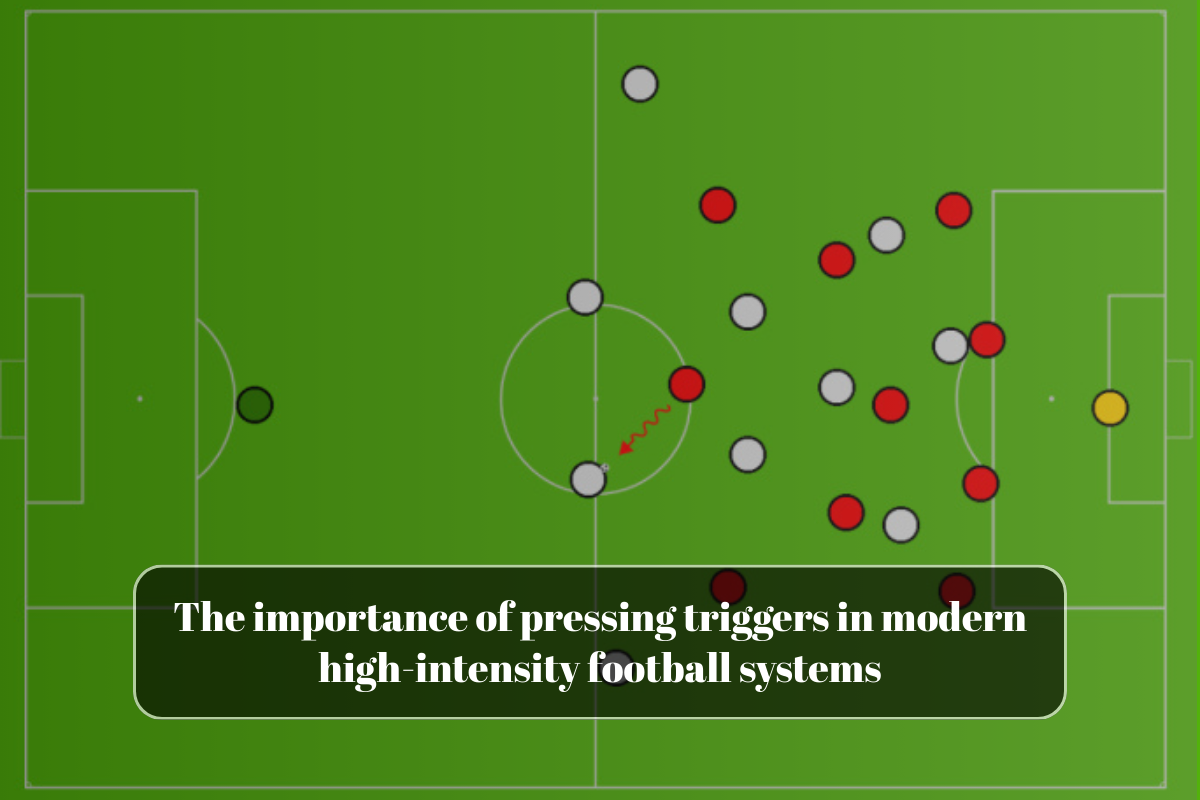
Modern football has evolved into a game of speed, coordination, and collective intelligence. Among the most defining tactical developments of the past two decades is the widespread adoption of high-intensity pressing systems. At the heart of effective pressing lies a critical concept: pressing triggers. These triggers dictate when, where, and how a team initiates pressure, transforming pressing from chaotic running into a coordinated, energy-efficient weapon.
What Are Pressing Triggers?
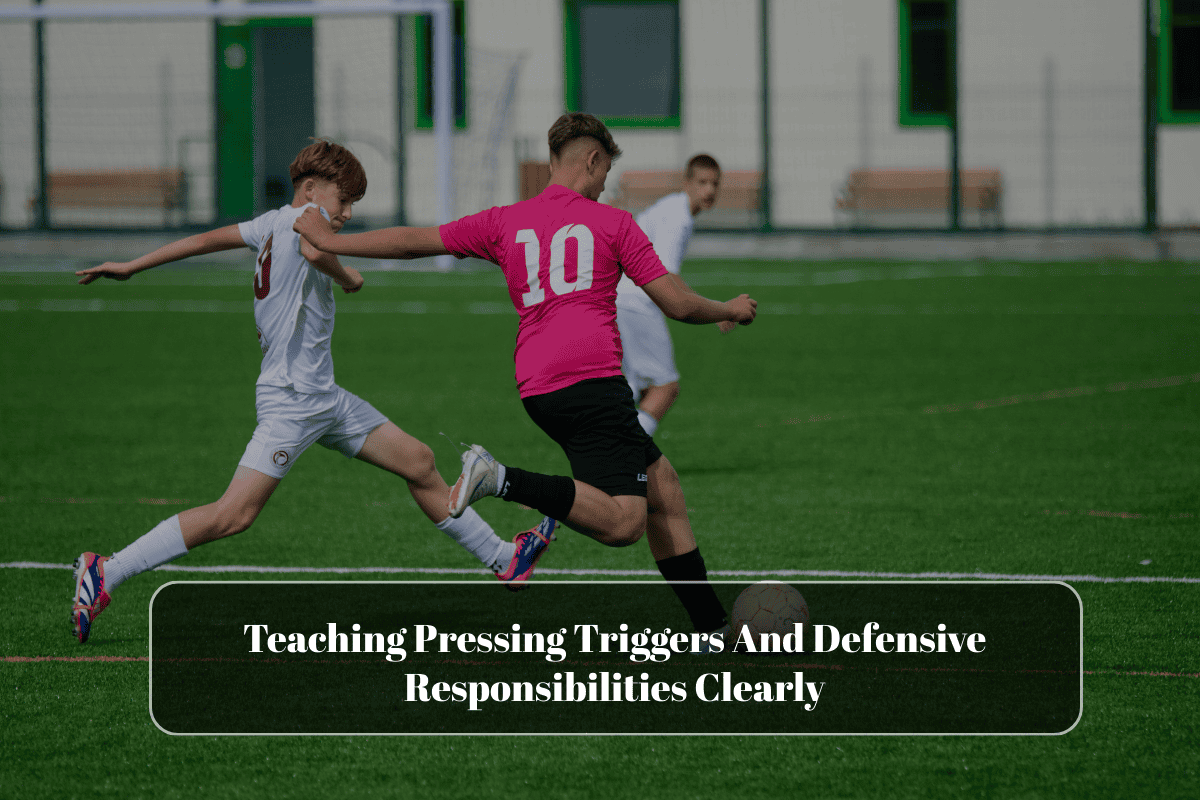
Pressing triggers are specific cues that signal a team to collectively apply pressure on the opposition. Rather than pressing continuously, teams wait for predefined moments that increase the likelihood of regaining possession or forcing mistakes.
Common triggers include:
- A backward or sideways pass
- A poor first touch
- An opponent receiving the ball with their back to goal
- A pass into wide or central “pressing traps”
- A slow ball circulation across the back line
These cues align the movements of the entire team, ensuring compactness and reducing the risk of being played through.
Why Pressing Triggers Matter in High-Intensity Systems
High-intensity football demands immense physical and mental output. Without structure, constant pressing quickly becomes unsustainable. Pressing triggers provide clarity and rhythm, allowing players to conserve energy while remaining aggressive at decisive moments.
Teams that press on triggers:
- Sprint fewer unnecessary meters
- Maintain better defensive shape
- Recover faster after failed presses
- Reduce gaps between lines
This balance between aggression and control is essential in modern elite football.
Synchronization and Collective Movement
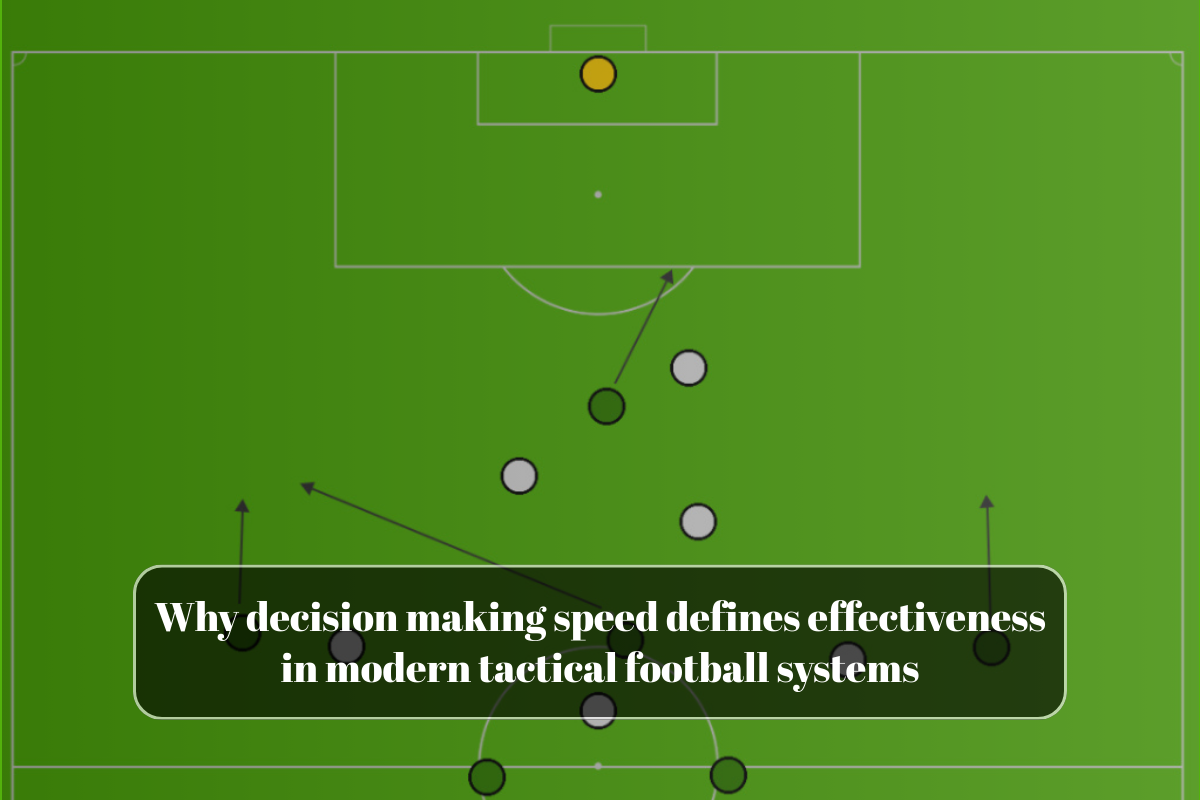
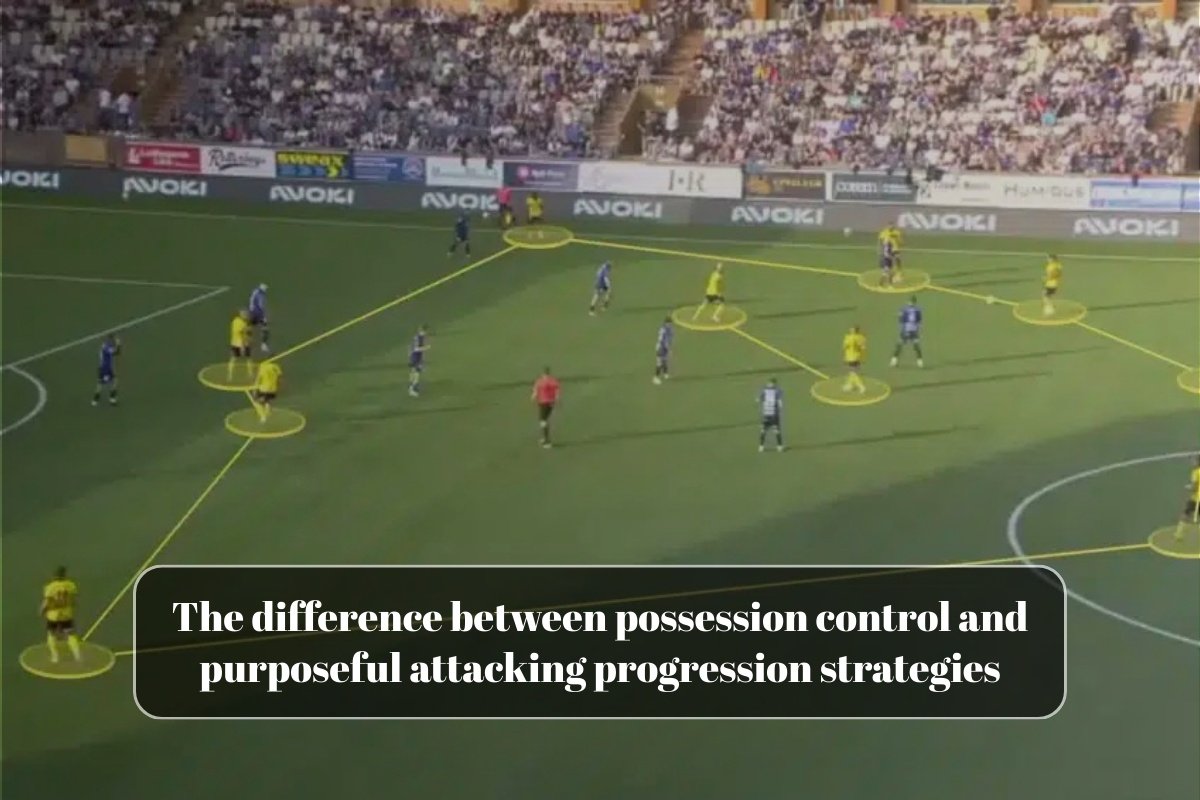
Pressing is only effective when executed collectively. One player stepping out without support creates space rather than pressure. Pressing triggers act as a shared language—when one player reacts, the rest of the team moves in unison.
For example, when a center-back receives a slow pass under pressure, the nearest forward closes the ball, midfielders jump passing lanes, and defenders step up to compress space. This synchronized movement turns individual effort into systemic dominance.
Creating Predictability for Your Own Team, Not the Opponent
Ironically, pressing triggers introduce internal predictability while creating external chaos. Players know exactly what to do in trigger moments, reducing hesitation and decision-making time.
For the opponent, however, these moments feel sudden and overwhelming. What appeared to be a safe passing option instantly becomes a high-risk situation, leading to rushed clearances or turnovers.
This contrast is one reason pressing-heavy teams consistently force errors even against technically strong opponents.
Tactical Examples at the Elite Level
Coaches such as Jürgen Klopp and Pep Guardiola have refined pressing triggers into core tactical principles. While their styles differ, both emphasize pressing cues over constant pressure.
At Liverpool FC, triggers like wide receptions or poor body orientation often initiate explosive counter-pressing. Meanwhile, Manchester City use pressing triggers to lock opponents into zones before regaining possession and immediately recycling attacks.
These systems show that pressing is not about intensity alone, but about timing.
Pressing Triggers and Transitional Dominance
One of the greatest advantages of well-coached pressing triggers is superiority in transition moments. When possession is regained following a triggered press, the opposition is often disorganized, out of shape, and facing their own goal.
This creates high-quality attacking opportunities with fewer passes required. In modern football, where chances are scarce, these transitional advantages are often the difference between winning and losing.
Psychological and Mental Benefits
Pressing triggers also provide psychological clarity. Players feel more confident knowing exactly when to act, reducing hesitation and emotional fatigue. Over time, this builds collective belief and aggression without recklessness.
For opponents, repeated exposure to coordinated pressing increases anxiety, discourages buildup play, and forces them into longer, less controlled passes.
Adaptability Across Different Game States
Effective pressing triggers can be adjusted depending on match context. A team may press aggressively on triggers while chasing a goal, or selectively when protecting a lead.
This adaptability allows teams to maintain their identity without becoming tactically rigid—an essential trait in modern football where in-game adjustments are constant.
FAQs
What are pressing triggers in football?
Pressing triggers are specific cues—such as a poor touch, backward pass, or body orientation—that signal a team to initiate coordinated pressure on the opponent.
Why are pressing triggers important in high-intensity systems?
They prevent constant, unsustainable pressing by ensuring players press at the right moments, conserving energy while maximizing defensive effectiveness.
How do pressing triggers improve team coordination?
They act as a shared signal for all players to move together, maintaining compactness and reducing the risk of being played through.
Are pressing triggers the same for every team?
No. Triggers vary based on coaching philosophy, player profiles, and tactical objectives, and are often tailored to exploit specific opponent weaknesses.
Do pressing triggers help in attacking play as well?
Yes. Winning the ball through triggered presses often leads to dangerous transition opportunities when the opponent is disorganized.
Can pressing triggers be adjusted during a match?
Absolutely. Teams frequently modify triggers depending on game state, scoreline, or fatigue levels to maintain control and balance.