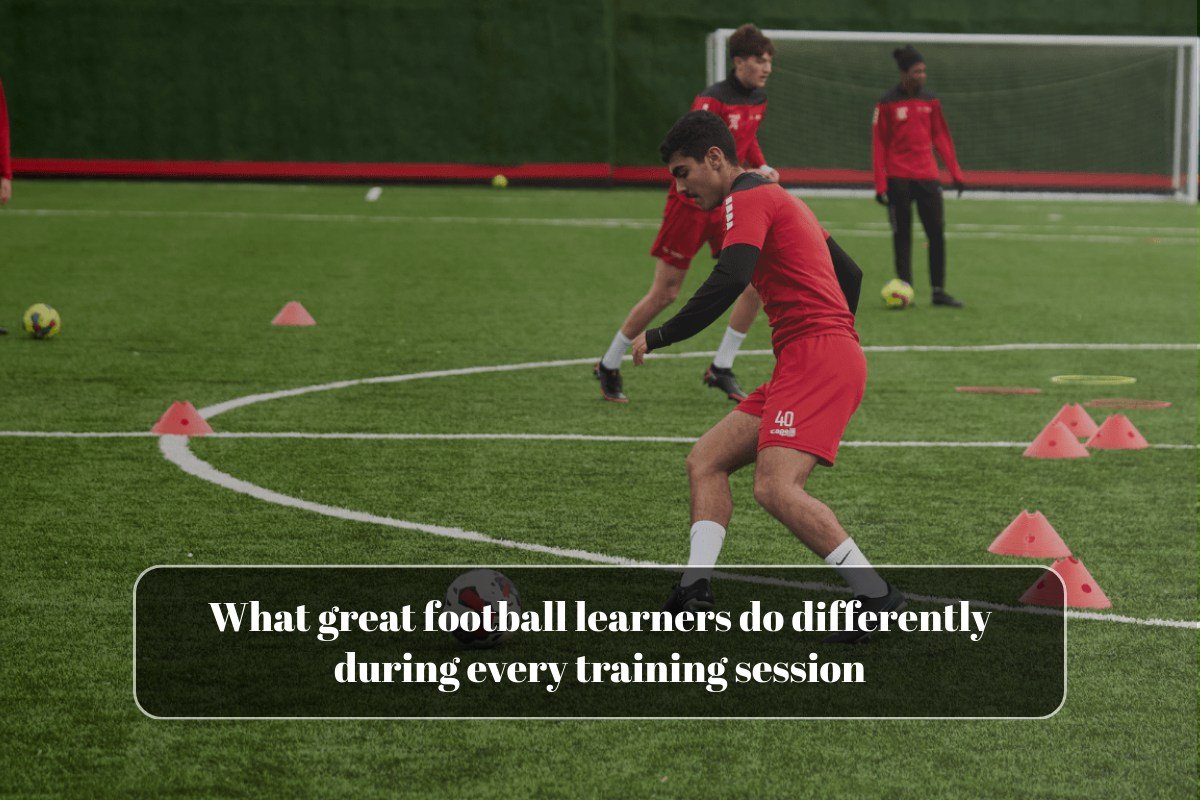
Great football learners approach every training session with a mindset that goes beyond routine drills or physical exertion. While many players simply “show up and train,” elite learners actively engage with each session as an opportunity to improve decision-making, technique, and understanding of the game. Their difference lies not in talent alone, but in how deliberately they learn every time they step onto the pitch.
They Train With Clear Intentions
Exceptional football learners never train aimlessly. Before a session begins, they identify one or two specific goals—such as improving first touch under pressure or scanning before receiving the ball. This clarity helps them stay mentally focused even during repetitive drills.
Rather than trying to improve everything at once, they narrow their attention. This intentional focus accelerates learning because the brain processes feedback more effectively when the objective is clear. Over time, these small, targeted improvements compound into major performance gains.
They Treat Every Drill Like a Match Situation
Average players often separate “training mode” from “game mode.” Great learners blur that line. They approach drills with match intensity, realism, and seriousness, imagining defenders, time pressure, and tactical consequences.
This mindset is commonly seen in players like Lionel Messi, who is known for executing simple drills with full concentration and realism. By simulating match conditions mentally and physically, elite learners ensure their training transfers directly into competitive performance.
They Constantly Scan and Think Ahead
Top learners use training to sharpen their football intelligence, not just their bodies. Even in warm-ups, they scan their surroundings, check shoulder positions, and anticipate the next action. This habit builds spatial awareness and faster decision-making.
They ask themselves silent questions: Where is space? Who is free? What happens next? Over time, this cognitive engagement becomes automatic, allowing them to play faster without rushing.
They Seek Feedback—Even When It’s Uncomfortable
While many players fear criticism, great learners actively seek it. They ask coaches for clarification, observe teammates, and reflect on mistakes without defensiveness. Feedback becomes data, not judgment.
Importantly, they also develop self-feedback skills. After a misplaced pass or poor movement, they immediately analyze why it happened and adjust on the next repetition. This rapid feedback loop is essential for consistent improvement.
They Embrace Mistakes as Learning Tools
Elite learners are not mistake-free; they are mistake-friendly. They understand that pushing boundaries leads to errors, and errors are essential for growth. Instead of playing safe in training, they attempt difficult passes, creative movements, and unfamiliar roles.
This willingness to fail accelerates development. By experimenting in training, they expand their technical and tactical range, becoming more adaptable during matches.
They Manage Energy and Recovery Intelligently
Great football learners respect their bodies as learning instruments. They manage intensity wisely, knowing when to push hard and when to conserve energy. Hydration, sleep, nutrition, and recovery routines are taken seriously because learning declines when fatigue dominates.
They also understand that mental freshness matters as much as physical readiness. By arriving prepared and focused, they maximize the quality—not just the quantity—of training.
They Reflect After Every Session
The learning process does not end when training finishes. Elite learners review sessions mentally or in writing, asking what improved, what struggled, and what to focus on next time. This reflection turns experience into structured learning.
Coaches like Pep Guardiola often emphasize reflection because it helps players connect training behaviors to match outcomes. Reflection ensures progress is intentional rather than accidental.
Consistency of Mindset Creates Excellence
What separates great football learners from average ones is not effort alone, but awareness, curiosity, and purpose. Every training session becomes a classroom, every drill a lesson, and every mistake a teacher. Over time, this learning-driven approach creates players who grow faster, adapt better, and perform more consistently under pressure.
FAQs
Do great football learners train longer than others?
Not necessarily. They focus on training smarter, with higher concentration and clearer objectives, rather than simply training more hours.
Can young players develop this learning mindset early?
Yes. Habits like reflection, focus, and seeking feedback can be developed at any age with proper guidance and encouragement.
Is physical talent still important?
Physical ability matters, but learning mindset often determines how far talent develops and how consistently it performs.
How can coaches support better learning in training?
By encouraging questions, allowing mistakes, setting clear objectives, and promoting reflection after sessions.
Does this approach work at amateur levels too?
Absolutely. Intentional learning benefits players at all levels, from grassroots football to elite competition.