Optical illusions are a delight for visually gifted minds. These visual illusions are excellent for assessing and investigating the functioning of the human brain. Researchers all over the world use optical illusions in their studies to better understand how the brain makes mental shortcuts.
Optical illusions are excellent for testing your visual perception and observing how your brain interprets visual context, subtle differences, and spatial relationships between objects. These illusion images are a real-time assessment of your observation abilities.
Optical illusions show how your brain processes information and actively applies prior assumptions and knowledge to make sense of what your eyes see. And illusions demonstrate how, in the absence of complete visual information, your brain ‘fills in the gaps’.
Not only do optical illusions reveal the inner workings of your brain, but they also stimulate it to improve problem-solving abilities, visual recall, and spatial reasoning. Optical illusions are excellent for testing your perspective and visual processing abilities.
How good is your sense of detail? Do you struggle to concentrate on a task for an extended period of time? Then we’ll put that to the test with this optical illusion challenge.
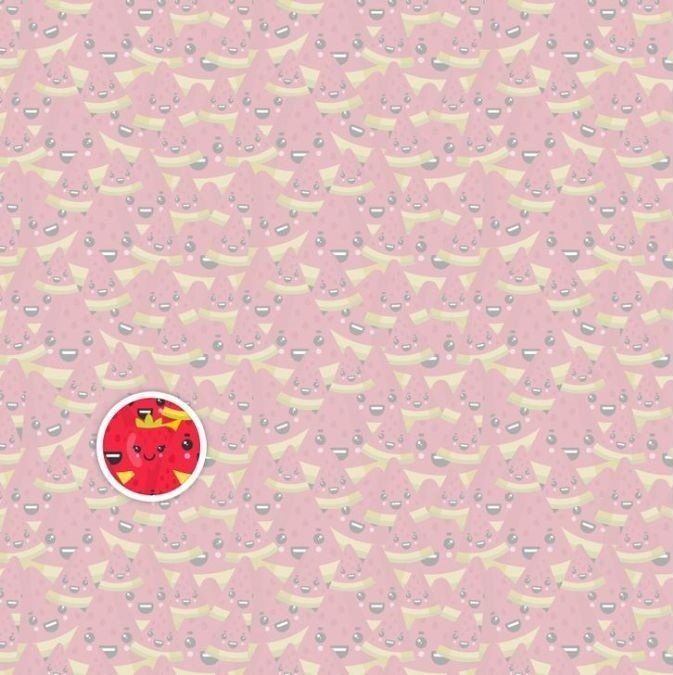
A strawberry is hidden in plain sight among the watermelon pieces. Can you find it before time expires?
Only people with 20/20 vision can spot the hidden strawberry in 15 seconds!
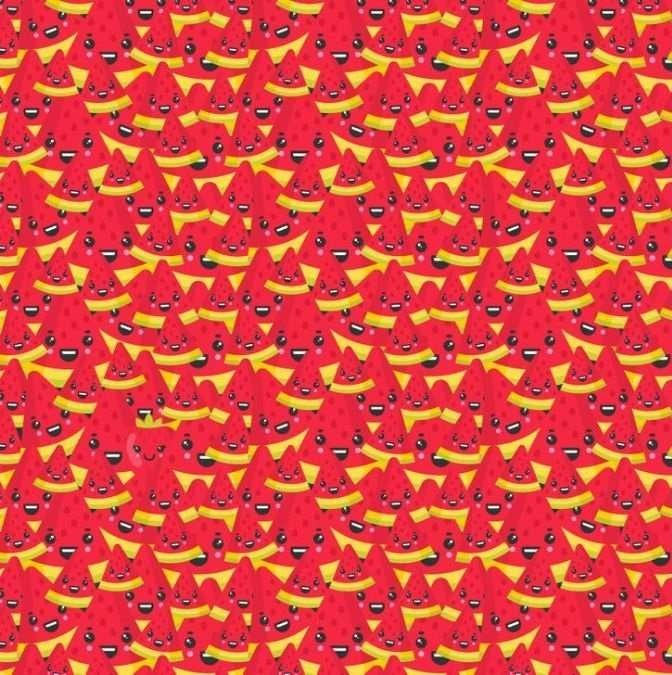
This optical illusion will put your scanning ability to the test as you look for an object hidden in plain sight among identicals. This image shows a strawberry hiding among watermelons.
This illusion challenge will test your brain’s ability to recognize patterns. How quickly can you distinguish between odd and similar?
The watermelon slices all look the same. The strawberry takes advantage of this, camouflaging itself among the red watermelon pieces.
To distinguish the strawberry from the watermelons, you must focus on its unique characteristics.
Examine the scene. Understand what you’re looking for. Something conical with seeds on it, correct? However, the watermelons look the same.
So you must concentrate on looking for key differences. Strawberry has a tiny stem and a leafy top.
Now that you have a visual of what you’re looking for, systematically scan the image.
Mentally divide the image into sections and check each one for the strawberry.
Have you found the strawberry?
Optical Illusion Answer
If you’re still looking for the strawberry, see the solution below. Did you find it in the allotted time? Tell us in the comments.