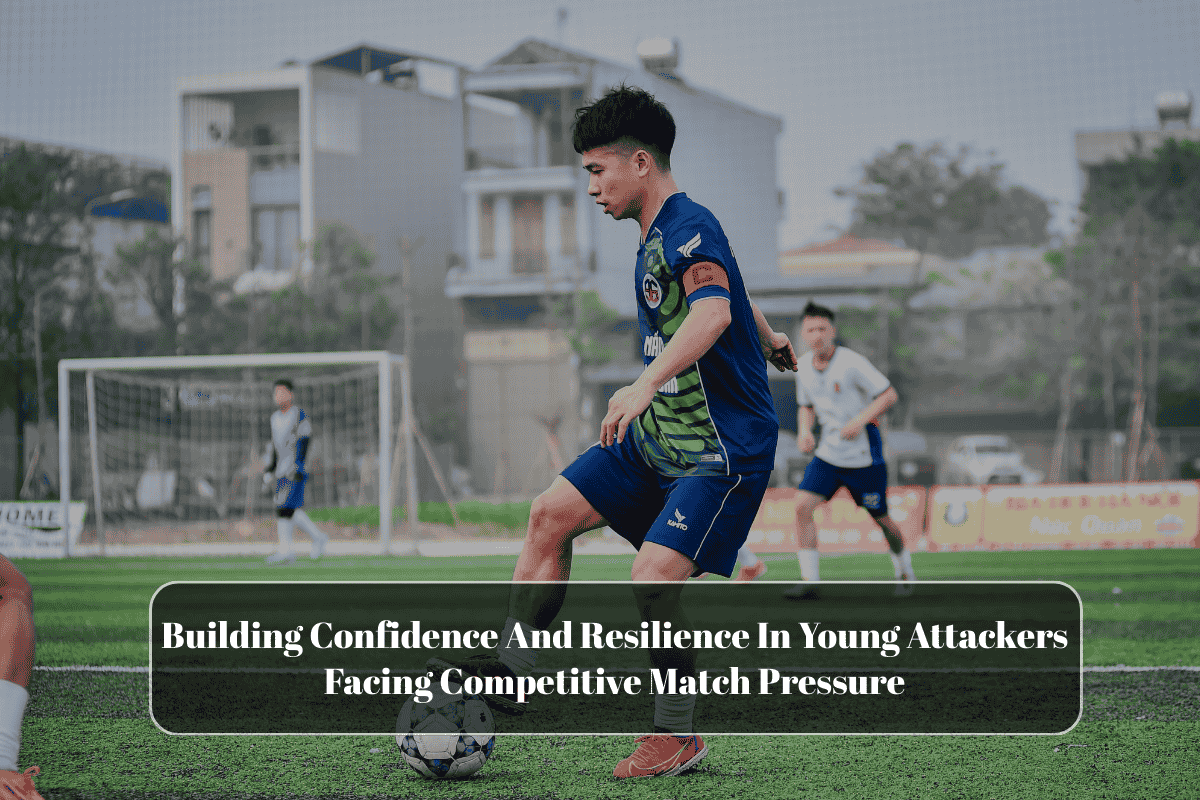
Young attackers in competitive US youth soccer face intense pressure from defenders, crowds, and expectations, but targeted training builds lasting confidence and resilience. Coaches and parents can use proven drills and mental strategies to transform hesitation into bold playmaking.
Essential Drills for Attackers
Hands-on exercises simulate match pressure, helping forwards take risks without fear.
- 1v1 Duels: Pair attackers against defenders in tight grids; reward successful dribbles or shots with points. Builds nerve to beat markers under fatigue.
- Small-Sided Games (3v3/4v4): Maximize touches in possession-focused matches; attackers rotate roles to encourage shots despite crowds.
- Finishing Under Pressure: Dribble past cones into crowded goals with passive defenders closing fast. Progress to live pressure for realism.
- Rapid Fire Shooting: 10 shots in 60 seconds from angles; celebrates makes to reinforce success patterns.
Integrate into warm-ups: 15 minutes daily yields quick gains, as repetition cuts “fear of unknown.”
Mental Toughness Techniques
Mindset work equips attackers to rebound from misses or turnovers common in high-stakes games.
Positive self-talk—”I own this space”—replaces doubt; practice pre-drill affirmations. Visualization: 5 minutes daily picturing breakaways and finishes primes neural pathways for clutch moments.
Goal-setting focuses effort: Weekly targets like “three progressive dribbles per half” track progress, boosting self-belief. Post-mistake routines—deep breath, reset focus—teach resilience over dwelling.
Coaching and Parental Roles
Praise effort over outcomes: “Great decision to shoot!” fosters growth mindset in US club/select programs. Assign small leadership tasks, like calling plays, to shy attackers for ownership.
Avoid over-critique; use video review for positives first. Parents model calm sidelines, reinforcing “one play at a time.”
Match-Day Application
Pre-game: Team huddle with shared successes; attackers visualize routes. Halftime: Quick wins review—”That run created space”—refuels drive.
Track metrics: Shots attempted rise 25% with routines, per youth coach data. Pair with recovery like youth workshops for holistic resilience.
Sustained practice turns pressure into opportunity, prepping for college showcases or pro pathways.
FAQs
1. Quick drill for timid forwards?
1v1 duels in small grids; reward risks to build dribble trust.
2. Mental tool for game nerves?
Positive self-talk + visualization; “I’ve trained this” calms pressure.
3. How often for results?
3x weekly drills; confidence spikes in 4-6 weeks.
4. Parental dos/don’ts?
Praise effort, stay positive—no outcome blame.
5. Measure progress?
Track shots/dribbles per game; set weekly goals.