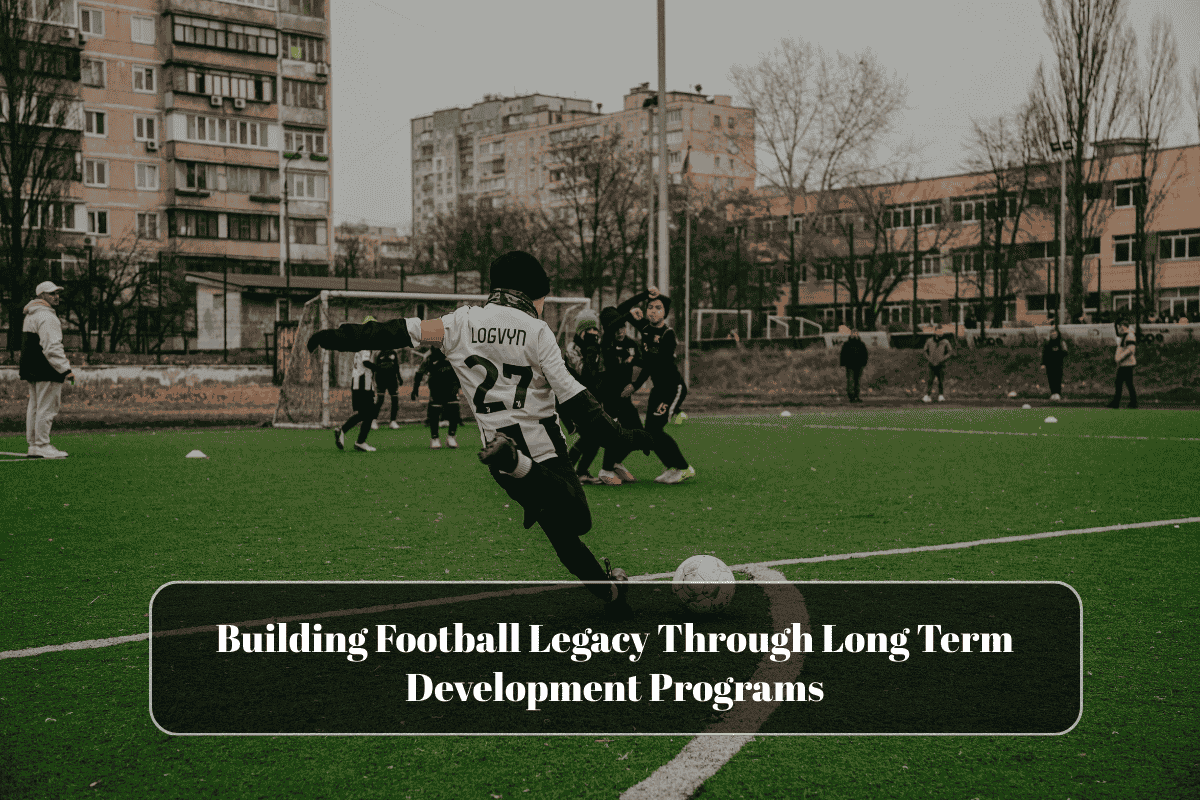
Building football legacy through long-term development programs (LTAD) creates sustainable talent pipelines, prioritizing holistic growth over early wins to produce skilled, resilient players who sustain the sport for generations.
In the U.S., USA Football’s Football Development Model (FDM)—launched 2019, expanded 2026—guides 9,000+ leagues with age-appropriate stages, reducing injury risks 20-30% while boosting retention and performance into high school and beyond.
The FDM Framework
FDM adapts USOPC’s American Development Model (ADM) for football, with seven stages emphasizing physical literacy, fun, and multisport participation before specialization. Key pillars: whole-person development, coach education, multiple pathways (flag to tackle), and safety via reduced contact early.
Age-Appropriate Stages
Progression ensures biological readiness:
| Stage | Age | Focus | Game Type |
|---|---|---|---|
| Discover & Participate | 6-9 | Fun, basics | K1-6 (non-contact) |
| Develop & Achieve | 10-12 | Skills, coordination | 6-9 player flag |
| Advance & Compete | 13-15 | Tactics, speed | 7v7, light contact |
| Excel & Dominate | 16+ | Strategy, power | Full 11v11 tackle |
Flag football as lifelong option retains non-tackle players.
Core Benefits of LTAD
- Injury Prevention: Gradual contact introduction cuts concussions 35%; proper sequencing avoids burnout.
- Skill Mastery: Fundamentals first—agility, balance—yield better athletes; 75% progress to varsity.
- Retention: Fun emphasis keeps 80% engaged vs. 50% win-focused leagues.
- Holistic Gains: Teamwork, confidence translate to life; multisport mandate builds versatility.
NSCA-endorsed: Strength training complements from age 10.
Implementation Roadmap
- League Adoption: Enroll via USA Football (free resources); train coaches (Heads Up certified).
- Stage-Specific Drills: U8 tag games for evasion; U12 position rotations.
- Parent Buy-In: Workshops on LTAD vs. short-term wins.
- Track Metrics: Participation rates, skill benchmarks quarterly.
- Scale Up: Grants fund equipment; partner schools for pathways.
Pilot leagues like Ute Conference saw 20% enrollment growth.
Coaching the Legacy
Coaches as architects: 70% time fundamentals, 30% scrimmages. Mental training: Growth mindset via error-positive feedback. Community ties: Alumni mentors sustain legacy.
Challenges and Solutions
Win pressure? Emphasize development stats publicly. Costs? FDM resources free; flag gear $50/team. Rural access? Virtual coach training.
Proven Outcomes
FDM youth show superior high school stats: 25% more starters, lower injuries. Builds NFL feeders—focus on masses sustains legacy vs. few stars. Your Panipat clinics mirror this: phased drills, responsibility from day one.
Legacy football: Programs producing players, citizens, leaders for decades.
FAQs
1. FDM stages?
7 total; Discover (6-9 fun), up to Excel (16+ elite).
2. Contact starts when?
Light at 13+; flag/non-contact prior.
3. Retention impact?
80% stay vs. 50% traditional leagues.
4. Coach training?
Free Heads Up via USA Football; ADM-aligned.
5. Injury reduction?
20-35% via sequencing, multisport.