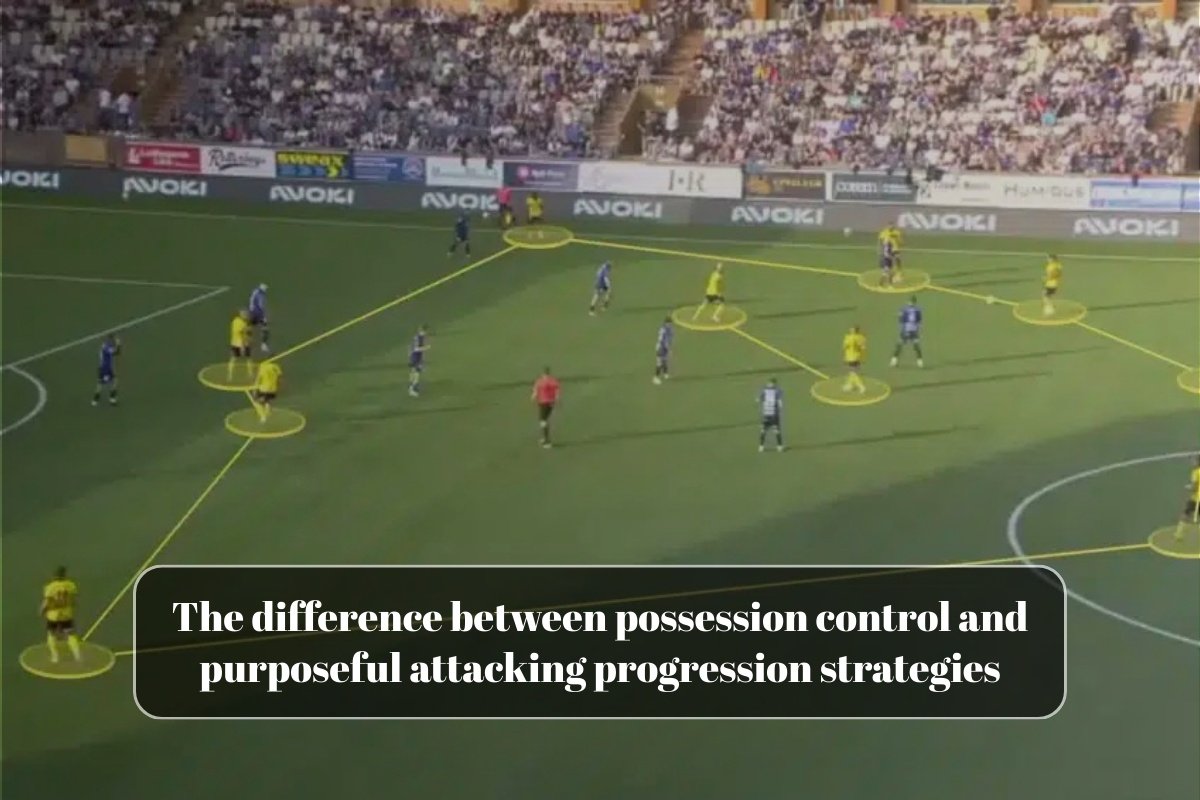
In modern football, possession statistics alone no longer define dominance. While some teams prioritize controlling the ball to dictate tempo, others focus on progressing forward with intent and speed. The distinction between possession control and purposeful attacking progression lies not in how much of the ball a team holds, but in how effectively that possession translates into attacking threat.
Clubs like FC Barcelona have historically embodied possession-heavy systems, while teams such as Liverpool F.C. and Real Madrid CF have demonstrated the power of direct progression and transitional attacking.
What Is Possession Control?
Possession control focuses on maintaining the ball to:
- Dictate match tempo
- Reduce opponent attacking opportunities
- Create positional superiority
- Wear down defensive structures
This approach emphasizes patience, spacing, and circulation.
Key Characteristics of Possession Control
- Short, structured passing sequences
- High midfield involvement
- Positional discipline
- Controlled buildup from the back
The philosophy aims to dominate territory and limit chaos. By minimizing turnovers, teams reduce defensive exposure.
Strengths and Limitations of Possession Control
| Aspect | Advantage | Limitation |
|---|---|---|
| Tempo | Full control of pace | Can become predictable |
| Defensive Stability | Reduced counterattack risk | Vulnerable to compact blocks |
| Tactical Structure | High positional clarity | Slower attacking penetration |
| Energy Management | Opponent forced to chase | May lack vertical urgency |
Possession without penetration can result in sterile dominance — impressive control but limited goal-scoring output.
What Is Purposeful Attacking Progression?
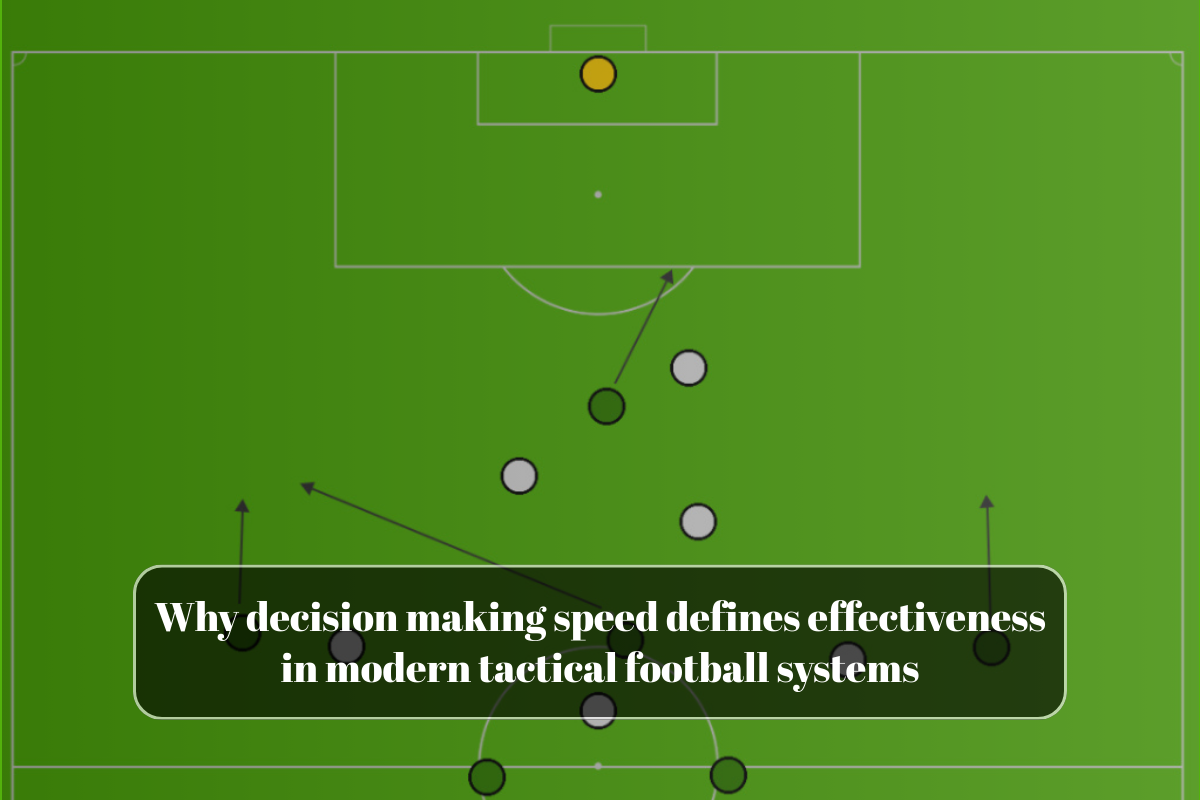
Purposeful attacking progression prioritizes forward movement with intent. Rather than circulating the ball extensively, teams seek to:
- Break lines quickly
- Exploit transitional moments
- Attack space behind defenses
- Create immediate scoring chances
The objective is efficiency rather than control.
Core Features of Purposeful Progression
- Vertical passing lanes
- Quick switches of play
- Direct runs behind defensive lines
- Explosive counterattacks
This approach values speed of execution over prolonged control.
Tactical Comparison: Control vs Progression
| Dimension | Possession Control | Purposeful Progression |
|---|---|---|
| Primary Objective | Ball retention | Forward penetration |
| Passing Style | Horizontal & short | Vertical & incisive |
| Risk Level | Lower | Higher |
| Game Tempo | Slower, calculated | Fast, dynamic |
| Defensive Exposure | Minimal transitions | Requires recovery speed |
Possession control minimizes risk; progression embraces calculated risk to maximize attacking reward.
The Role of Space and Timing
Purposeful progression thrives when opponents push forward, leaving transitional spaces. In contrast, possession control is most effective against aggressive pressing sides, where patience can disorganize defensive structures.
Timing is crucial:
- Progress too slowly, and defenses reset
- Progress too quickly without structure, and possession is lost
Elite teams blend both principles strategically depending on match context.
Psychological and Strategic Implications
Possession control often builds psychological dominance. Opponents grow frustrated chasing the ball. However, purposeful progression can demoralize teams instantly with sudden, decisive attacks.
Strategic considerations include:
- Scoreline
- Opponent defensive shape
- Player profile
- Match phase
For example, a team leading late in the game may revert to possession control to manage risk.
Modern Hybrid Models
The most successful contemporary teams combine both strategies. Structured buildup transitions into sudden vertical penetration. Control provides stability; progression provides threat.
This hybrid approach allows:
- Tactical flexibility
- Adaptation to multiple game states
- Greater unpredictability
Rather than viewing possession and progression as opposites, modern coaching philosophy sees them as complementary tools.
Key Indicators of Effective Progression
- Line-breaking passes
- Progressive carries
- Final-third entries
- Expected goals (xG) from open play
Metrics increasingly measure how effectively possession transforms into genuine attacking danger.
FAQs
Q. Is possession control better than attacking progression?
Neither is inherently superior. Effectiveness depends on tactical context and player profiles.
Q. Can a team succeed without high possession?
Yes. Many teams thrive through efficient progression and transitional play.
Q. Why does possession sometimes fail to produce goals?
Without vertical penetration or movement behind defenses, possession can become predictable.
Q. Do top teams combine both strategies?
Yes. Modern elite teams integrate possession control with purposeful progression for tactical balance.