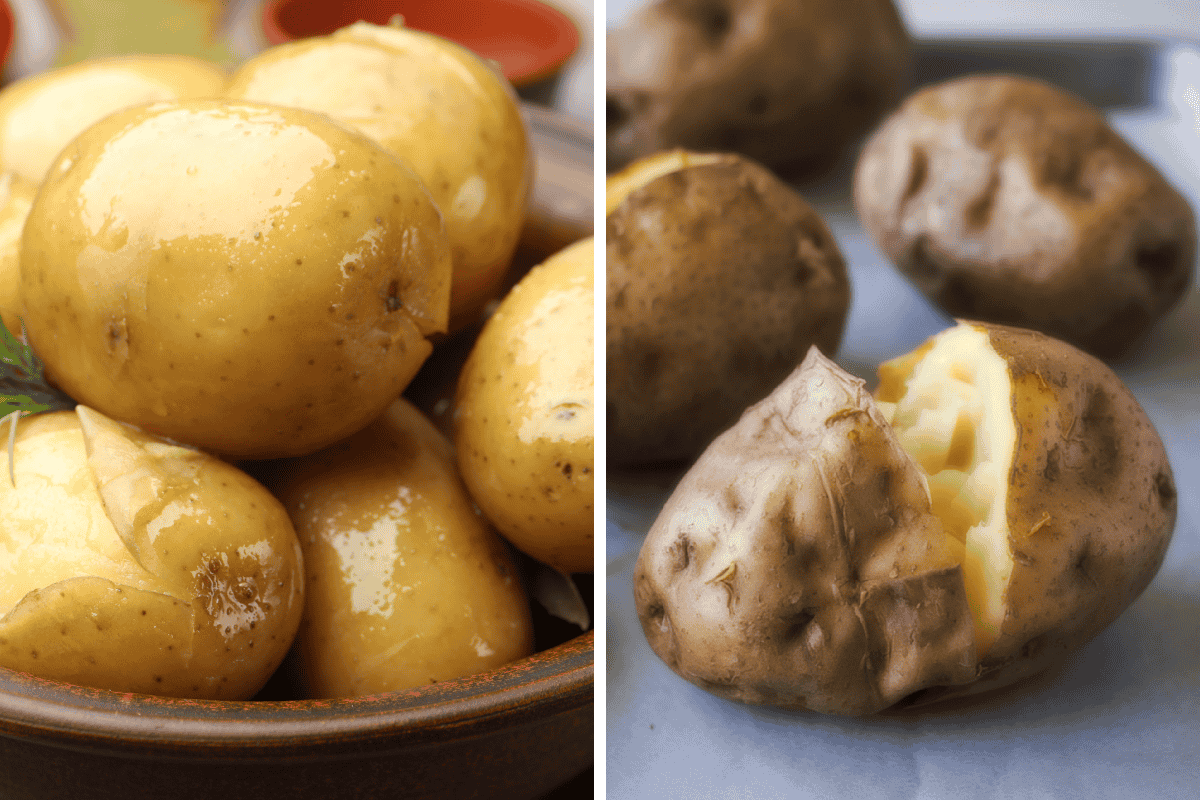
You open your pantry, grab a few potatoes for dinner, and suddenly notice tiny “eyes” growing out of them. It looks strange, but does that mean they’re unsafe to eat? The good news is that sprouted potatoes are usually safe — if you handle them properly.
However, there are a few important things you should check before turning them into mashed potatoes or fries. Let’s break it down in simple terms so you know exactly when to keep them and when to throw them away.
Are Sprouted Potatoes Safe to Eat?
Yes, sprouted potatoes are generally safe to eat. But you must remove the sprouts and any green areas before cooking.
Potatoes naturally contain compounds called glycoalkaloids. When potatoes sprout or turn green, the level of these compounds increases. In large amounts, glycoalkaloids can cause:
- Stomach pain
- Vomiting
- Nausea
If the sprouts are small and the potato is still firm, you can simply cut off the sprouts and peel away any green patches. After that, the rest of the potato is usually fine to cook.
When Should You Throw Sprouted Potatoes Away?
Not all sprouted potatoes are worth saving. Here’s when you should toss them:
- The potato feels soft or mushy
- It looks shriveled or wrinkled
- It smells bad
- The sprouts are long and thick
- The inside is heavily green
If the potato is firm and only has tiny sprouts, it’s okay to trim and use. But if it feels moist or squeezable, it’s past its best. Soft potatoes can have a bitter taste and poor texture when cooked.
Why Do Potatoes Sprout in the First Place?
Potatoes are actually living plant parts. They grow underground, so they love dark and slightly moist environments. When you store them in a pantry that’s dark and humid, they think they’re back in the soil.
So what happens? They start growing again.
Sprouting is simply the potato trying to become a new plant. It’s natural and doesn’t automatically mean the potato is bad.
How to Remove Potato Sprouts Properly
Removing sprouts is easy. Here’s how:
- Rinse the potato under running water.
- Snap off small sprouts by hand.
- Use a vegetable peeler or small knife to dig out the “eyes.”
- Peel off any green areas.
- Rinse again before cooking.
Make sure you remove the entire sprout base. Even if the potato looks slightly uneven afterward, that’s fine.
Best Way to Store Potatoes
Yes, sprouted potatoes are generally safe to eat. But you must remove the sprouts and any green areas before cooking.
Potatoes naturally contain compounds called glycoalkaloids. When potatoes sprout or turn green, the level of these compounds increases. In large amounts, glycoalkaloids can cause:
- Stomach pain
- Vomiting
- Nausea
If the sprouts are small and the potato is still firm, you can simply cut off the sprouts and peel away any green patches. After that, the rest of the potato is usually fine to cook.
When Should You Throw Sprouted Potatoes Away?
Not all sprouted potatoes are worth saving. Here’s when you should toss them:
- The potato feels soft or mushy
- It looks shriveled or wrinkled
- It smells bad
- The sprouts are long and thick
- The inside is heavily green
If the potato is firm and only has tiny sprouts, it’s okay to trim and use. But if it feels moist or squeezable, it’s past its best. Soft potatoes can have a bitter taste and poor texture when cooked.
Why Do Potatoes Sprout in the First Place?
Potatoes are actually living plant parts. They grow underground, so they love dark and slightly moist environments. When you store them in a pantry that’s dark and humid, they think they’re back in the soil.
So what happens? They start growing again.
Sprouting is simply the potato trying to become a new plant. It’s natural and doesn’t automatically mean the potato is bad.
How to Remove Potato Sprouts Properly
Removing sprouts is easy. Here’s how:
- Rinse the potato under running water.
- Snap off small sprouts by hand.
- Use a vegetable peeler or small knife to dig out the “eyes.”
- Peel off any green areas.
- Rinse again before cooking.
Make sure you remove the entire sprout base. Even if the potato looks slightly uneven afterward, that’s fine.
Best Way to Store Potatoes
Proper storage can prevent sprouting in the first place.
Here’s how to store potatoes correctly:
- Keep them in a cool, dry place
- Store in a breathable bag (paper or mesh)
- Avoid plastic bags
- Keep away from direct sunlight
- Do NOT store in the refrigerator
Cold temperatures in the fridge turn potato starch into sugar. This can make them brown too quickly when cooked and change the taste.
Can You Plant Sprouted Potatoes?
Yes! If your potatoes are too old to eat but still firm, you can plant them in your garden.
Here’s how:
- Cut the potato into pieces, making sure each piece has at least one sprout
- Plant a few inches deep in soil
- Keep the sprouts facing upward
- Water regularly
In a few weeks, they can grow into new potato plants.
How to Use Sprouted Potatoes in Cooking
If your potatoes are still firm after removing sprouts, you can use them in many recipes, such as:
- Mashed potatoes
- Fried potatoes and onions
- Breakfast potatoes
- Scalloped potatoes
- Baked potato soup
- Potato salad
Just make sure there are no large green areas or long sprouts left behind.
FAQ
Q1. Can eating sprouted potatoes make you sick?
Only if large amounts of green areas or sprouts are consumed. Small sprouts removed properly are usually safe.
Q2. Why do potatoes turn green?
Exposure to light increases chlorophyll and certain natural compounds, which can make them taste bitter.
Q3. Should I refrigerate potatoes?
No. Cold temperatures change the starch into sugar and affect taste and texture.
Q4. Are long sprouts dangerous?
Long, thick sprouts usually mean the potato is too old and should be discarded.
Q5. Can I plant sprouted potatoes?
Yes. Cut them into pieces with sprouts and plant them in soil to grow new potatoes.