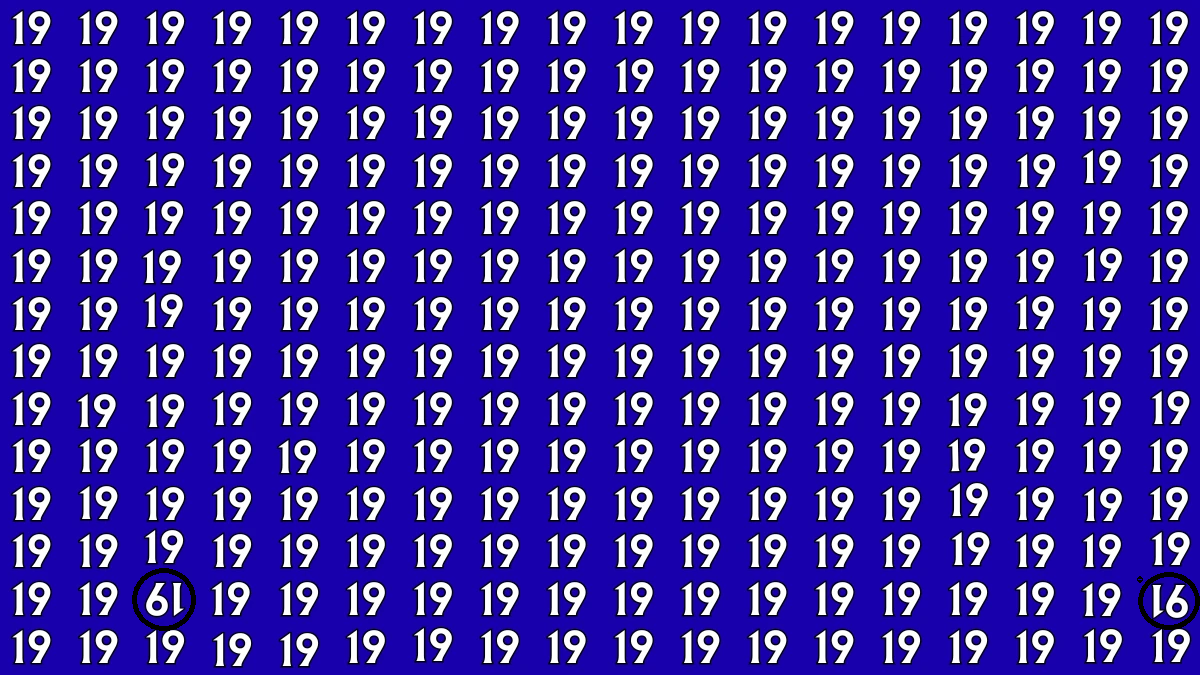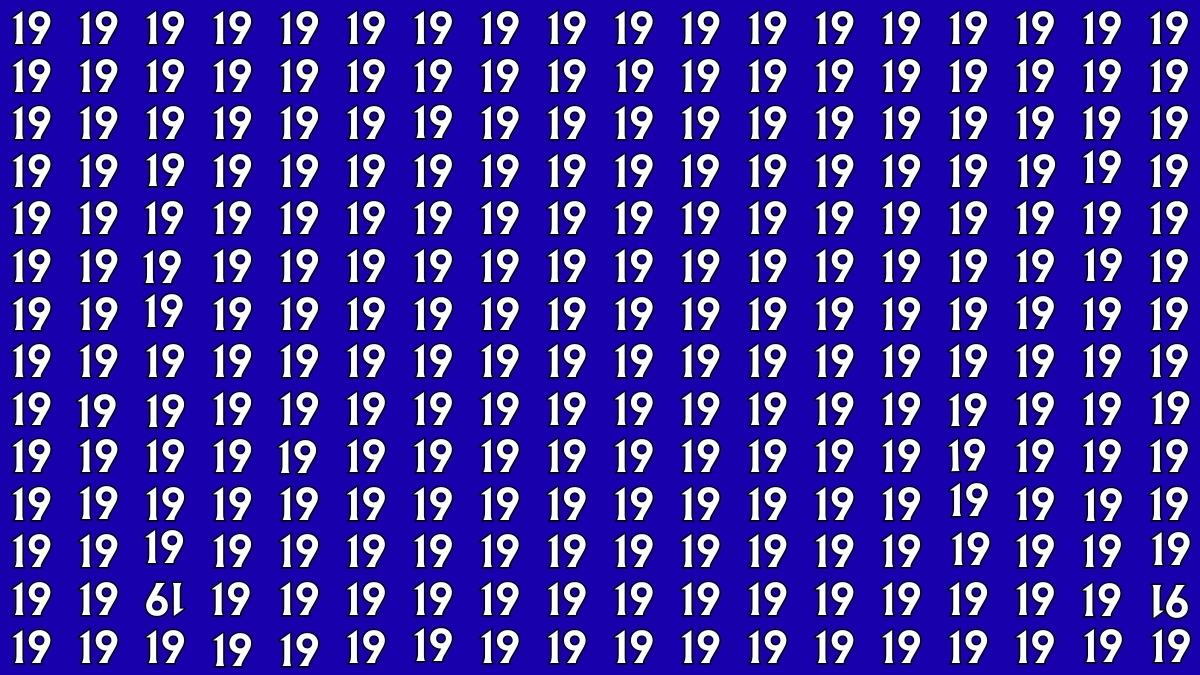
Are you prepared for an observational challenge? This optical illusion will test the limits of your attention to detail and visual perception. In this article, we’ll give you a challenge: find two inverted numbers — 61 and 16 — hidden among a grid of similar-looking numbers. Is there a catch? You have just 9 seconds to find them! Let’s get into the world of optical illusions and see how this challenge works.
Why Are Optical Illusions So Fascinating?
Optical illusions are captivating because they alter how our brains interpret visual information. What we see may not always be a true representation of reality. Our brains are constantly working to make sense of the patterns and shapes we see, which can lead to misperceptions.
This is why optical illusions, like the one we’re about to put to the test, are so intriguing. They highlight how our brains process visual information, demonstrating that seeing is not always believing.
How Does This Optical Illusion Work?
The illusion consists of two numbers that are flipped upside down: 61 and 16. At first glance, the grid appears to be filled with seemingly random numbers, but these inverted numbers are hidden among the digits. Spotting them necessitates a keen eye and quick reaction time.
These puzzles work because they force your brain to concentrate on details, ignore distractions, and work within a time limit. The challenge is simple but difficult: can you find the two hidden numbers in just 9 seconds?
Can You Spot the Inverted Numbers?
Here’s how the challenge works:
- You’ll be presented with a grid of numbers.
- Among these, two numbers—61 and 16—are inverted.
- Your goal is to find them in under 9 seconds.
Don’t worry if you’re under pressure; the key to success in such illusions is your ability to focus and process patterns quickly. The more you practice, the better you will become at detecting these subtle details.
Tips for Spotting Inverted Numbers
- Look for Subtle Differences: The inverted numbers may look very similar to other numbers in the grid, but if you focus closely on the digits’ orientation, you will spot the odd ones out.
- Scan the Grid Quickly: In an illusion like this, it’s important to move your eyes around the grid quickly but systematically. Try not to linger on one area for too long.
- Train Your Eye: If you find it challenging, practice with simpler optical illusions first. The more you train your visual perception, the easier these challenges will become.
Why Are These Challenges Good for the Brain?
Optical illusions and perception tests are more than just entertaining; they also provide cognitive benefits. Participating in these types of challenges improves cognitive function, attention to detail, and concentration. These puzzles stimulate a variety of brain areas, particularly those associated with visual processing and spatial awareness. Regularly testing your brain with optical illusions can help you stay sharp and improve your problem-solving abilities.
Solution
If you’re still searching for the number “61 and 16,” you can find it in the photo below.