In elite football, the ability to control tempo often determines the outcome of high-pressure matches. When space is limited, stakes are high, and momentum shifts quickly, teams that dominate the midfield usually dictate not just how the game is played, but when. One of the most effective ways to achieve this control is through a compact midfield structure.
Compact midfields are not about defensive caution alone. At their best, they enable teams to slow the game down, accelerate it deliberately, and neutralize opposition threats under intense pressure. This article explores how compact midfields function, why they are so effective in decisive matches, and how top teams use them to control tempo.
Understanding Midfield Compactness
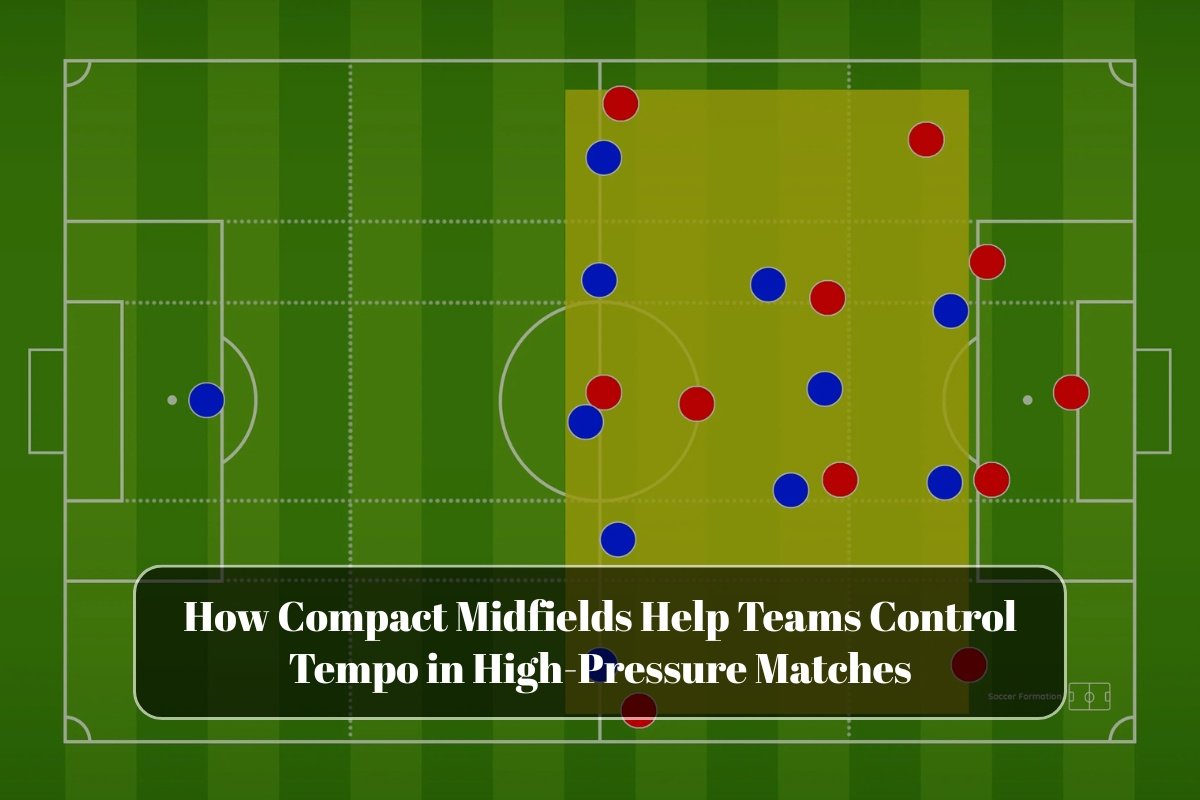
Midfield compactness refers to the reduced horizontal and vertical spacing between midfield players, and between midfield and defensive lines. Rather than spreading across the pitch, players operate within tight distances, creating numerical and positional superiority in central areas.
This structure achieves three core objectives:
- Limits opposition space between the lines
- Increases passing options for ball retention
- Enables rapid collective pressing and counter-pressing
In high-pressure matches—finals, derbies, knockout rounds—space and time are scarce. Compact midfields thrive precisely under these conditions.
Tempo Control: Why the Midfield Matters Most
Tempo in football is defined by the speed of circulation, transitions, and decision-making. While forwards finish moves and defenders protect leads, the midfield regulates rhythm.
A compact midfield allows a team to:
- Slow the game by circulating possession safely
- Speed it up by breaking lines with short, vertical passes
- Interrupt opposition momentum through coordinated pressure
This balance is critical in matches where emotional intensity and tactical discipline collide.
Positional Superiority and Passing Angles
Compact midfields improve tempo control by maximizing passing triangles and diamonds. With players positioned close together, the ball carrier always has multiple short options, reducing risk under pressure.
Teams such as Barcelona during their peak positional-play era demonstrated how tight midfield spacing enables:
- One-touch combinations
- Continuous movement off the ball
- Control without excessive possession speed
Rather than forcing play forward, compact units recycle the ball until the right moment appears.
Defensive Stability Through Central Density
High-pressure matches often hinge on minimizing mistakes. Compact midfields reduce exposure by clogging central passing lanes, forcing opponents wide and into lower-value areas.
This central density:
- Prevents direct passes between the lines
- Protects center-backs from isolation
- Slows counterattacks before they develop
Modern elite teams prioritize central control because transitions through the middle are the most dangerous moments in football.
Pressing Efficiency and Counter-Pressing
Compactness is essential for effective pressing. When midfielders operate close together, pressing becomes collective rather than individual.
The benefits include:
- Shorter distances to close down the ball
- Immediate support if the first press is bypassed
- Faster regaining of possession after turnovers
Manchester City under Pep Guardiola exemplifies this principle. Their midfield compactness allows them to lose the ball briefly without losing control of the match’s tempo.
Managing Emotional and Tactical Pressure
In high-pressure fixtures, emotional surges often lead to rushed decisions. Compact midfields act as a psychological stabilizer.
By offering constant support angles and predictable spacing, they:
- Reduce panic under pressing
- Encourage composure in possession
- Allow leaders to dictate calmer phases
This is particularly valuable late in matches when fatigue and anxiety peak.
Compact Midfields in Different Tactical Systems
Compactness is adaptable across formations:
4-3-3
The single pivot stays close to two interiors, forming a triangle that controls central zones while allowing controlled wide expansion.
3-5-2
Three central midfielders naturally create compact overloads, ideal for tempo control against pressing opponents.
4-2-3-1
Double pivots maintain short distances to screen the defense and recycle possession under pressure.
The common thread is not formation, but spacing discipline.
When to Compress and When to Expand
Elite teams understand that compactness is dynamic. They compress to regain control, then expand to exploit space.
Compact midfields enable:
- Controlled slow phases to protect leads
- Sudden tempo acceleration through vertical passes
- Strategic game management rather than constant intensity
This flexibility separates top-level sides from reactive ones.
Case Study: Knockout Football
In Champions League knockout matches, where away goals, fine margins, and momentum shifts matter, compact midfields are consistently favored. Teams like Bayern Munich rely on tight midfield spacing to:
- Neutralize counterattacks
- Control second balls
- Sustain pressure without overcommitting
The result is dominance without recklessness.
Common Misconceptions
Compact midfields are sometimes misinterpreted as negative or overly defensive. In reality, they are control mechanisms, not retreat strategies. Compactness does not limit creativity—it enables it by creating safer platforms for risk-taking at the right moments.
Frequently Asked Questions (FAQ)
Q1: Is a compact midfield the same as parking the bus?
No. Compact midfields focus on central control and tempo management, not deep defensive blocks. They can be highly proactive and possession-oriented.
Q2: Do compact midfields reduce attacking width?
Temporarily, yes—but only to create central dominance. Width is often reintroduced once control is established.
Q3: Are compact midfields more effective against pressing teams?
Yes. Short distances and passing options make it easier to resist high presses and regain composure.
Q4: Can smaller or less technical teams use compact midfields?
Absolutely. Compactness relies more on spacing, discipline, and coordination than individual brilliance.
Q5: What is the biggest risk of playing too compact?
If spacing becomes static or overly deep, teams can struggle to progress the ball. Compactness must be dynamic to remain effective.