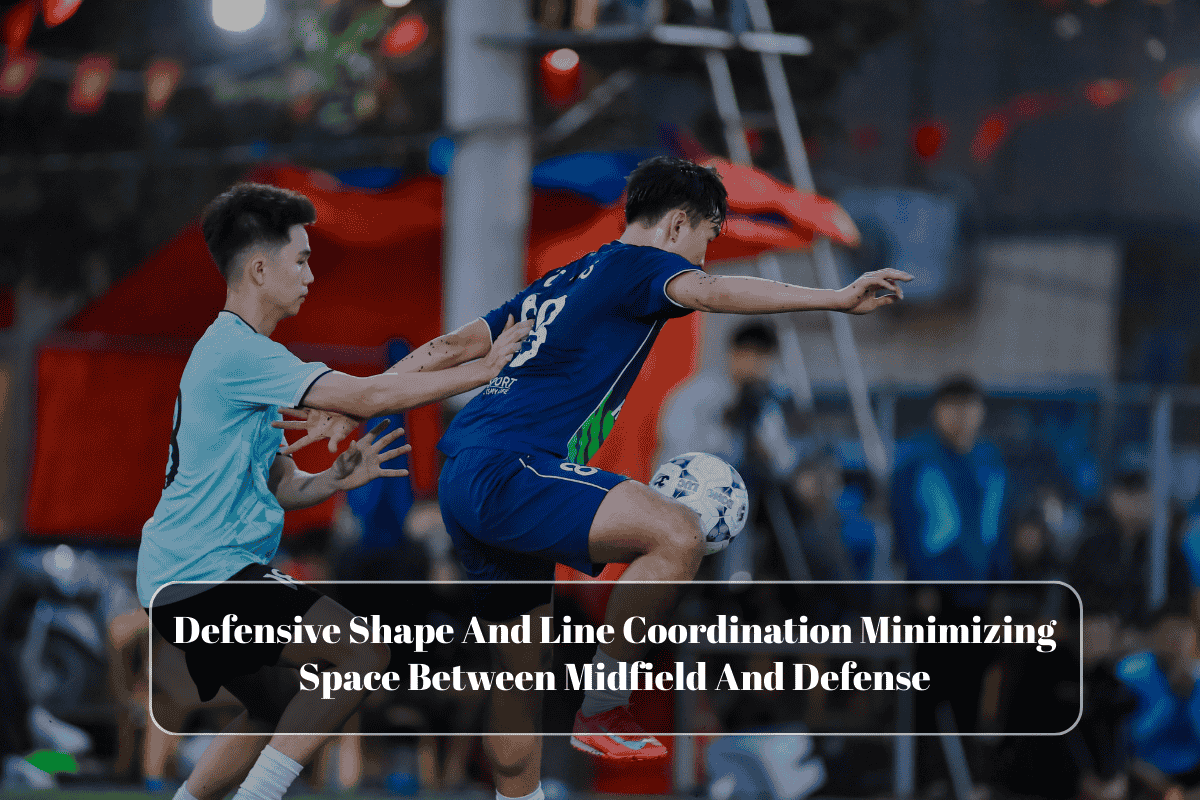
Defensive shape and line coordination form the backbone of soccer success, compacting space between midfield and defense to suffocate opponents’ attacks. US youth and pro teams adopting these tactics, like MLS clubs in 4-3-3 or 4-4-2, concede fewer shots by pressing smartly and staying connected.
Principles of Compact Shape
Maintain a narrow, layered unit where midfield drops to shield the back four, minimizing gaps for through-balls. Distance between lines stays 10-15 yards—midfielders tuck in centrally, full-backs pinch to cover wide threats. This “rest defense” triggers high presses when cues align, forcing turnovers high up pitch.

Communication binds it: Center-backs call “step up/step down,” midfield pivots scan for runners. Compactness cuts shots conceded by 25%, per analytics on pressing success and line height.
Key Formations
- 4-3-3: Four defenders, single pivot midfield shields, two advanced mids press half-spaces. Pivot drops between CBs on possession loss, keeping lines tight.
- 4-4-2: Flat midfield four screens defense; wingers track back, mids stagger for cover.
- 3-5-2: Three CBs, wing-backs narrow, DM as anchor links to attack—versatile for control.
Adjust dynamically: High block vs. low; press on poor touches, drop on progressive passes.
Line Coordination Tactics
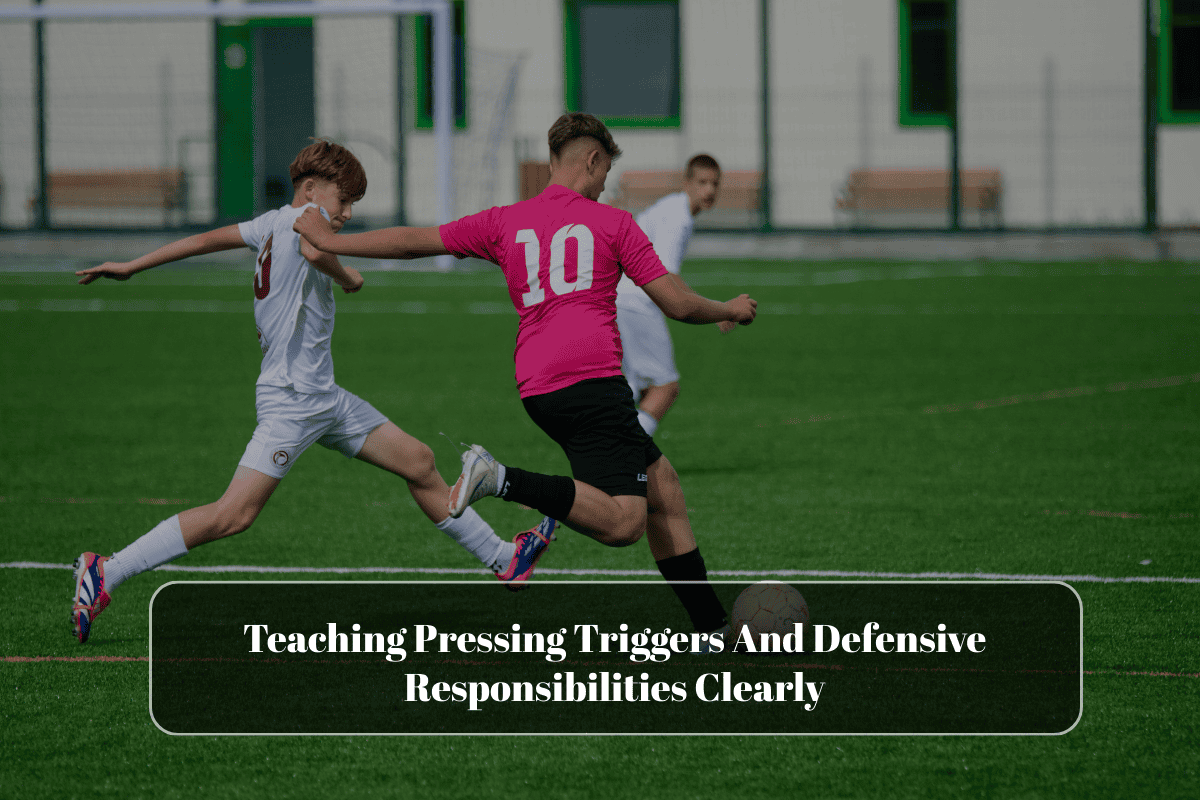
- Pressing Triggers: Ball side (head down), forward passes, or wide overloads—first midfielder angles run, others shift across to cover.
- Cover and Balance: Presser gets support (cover), opposite side shifts (balance) to deny switches. Defenders step as unit, offside trap on cues.
- Mid-Def Junction: DMs jockey to delay, forcing sideways; CBs mark zonally behind. Full-backs tuck to half-space, denying cutbacks.
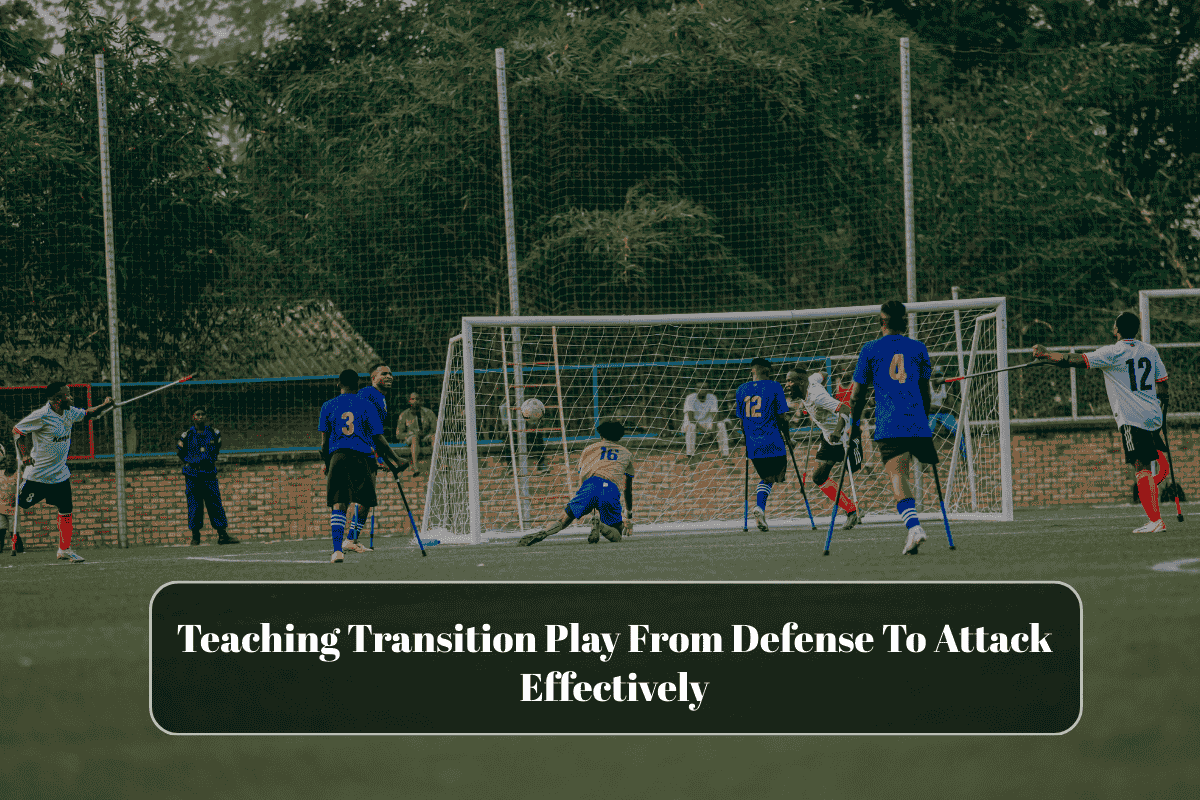
- Transition: Win ball? Immediate forward pass; lose it? Regain shape in 5 seconds.
Drills like 4v4+4 SSGs hone pressing and shape under pressure.
Training Drills
Build habits through progression.
- Shape Walkthroughs: Unopposed full-pitch; coach calls triggers (cones for ball position), adjust lines—add “head up/down” for line height.
- Rondo Variations: 6v4 in midfield grid; focus closing lanes, shifting as unit.
- 11v11 Shadow Play: Possession team attacks; defenders practice cues without opposition ball.
- Small-Sided Press: 4v4+4; neutrals press triggers, reward compactness.
- Full Games: Conditioned restarts from GK to test under fatigue.
Weekly sessions yield 15-20% fewer concessions after 4 weeks.
Common Errors and Fixes
Gaps: Mid drops too deep? Drill jockeying angles. Full-backs bomb? Teach tracking discipline.
Ball-Watching: Emphasize scans; video analysis of pro games like USMNT.
Over-Press: Teach when to drop—poor cues waste energy. Youth: Start zonal, evolve man-oriented.

MLS data shows compact shapes correlate to top defenses—e.g., high press + low block hybrids.
Tactical Breakdown
| Element | Role | Key Cue |
|---|---|---|
| Pivot DM | Shield CBs | Backward pass |
| Advanced Mids | Press half-spaces | Sideways ball |
| Full-Backs | Pinch/cover | Wide overload |
| CB Pair | Step/step | Forward pass |
| Distance | 10-15 yds lines | Constant scan |
Visualize as a spring: Compress centrally, expand wide only on switches.
Coaching Tips
Communicate constantly—”Closer! Shift!”—build via walkthroughs before opposition. Adapt to foes: High vs. possession teams, low vs. direct. Track metrics: PPDA (passes per defensive action), shots faced.
US coaches integrate into youth curricula for college/pro pipelines.
FAQs
1. Ideal line distance?
10-15 yards; test in drills for your squad.
2. Youth vs. pros?
Youth emphasize basics; pros add nuances like traps.
3. Press every ball?
No—cues only; rest shape conserves energy.
4. Fix wide gaps?
Full-backs tuck, wingers drop—drill shifts.
5. Measure success?
Shots conceded, xGA, pressing regains.