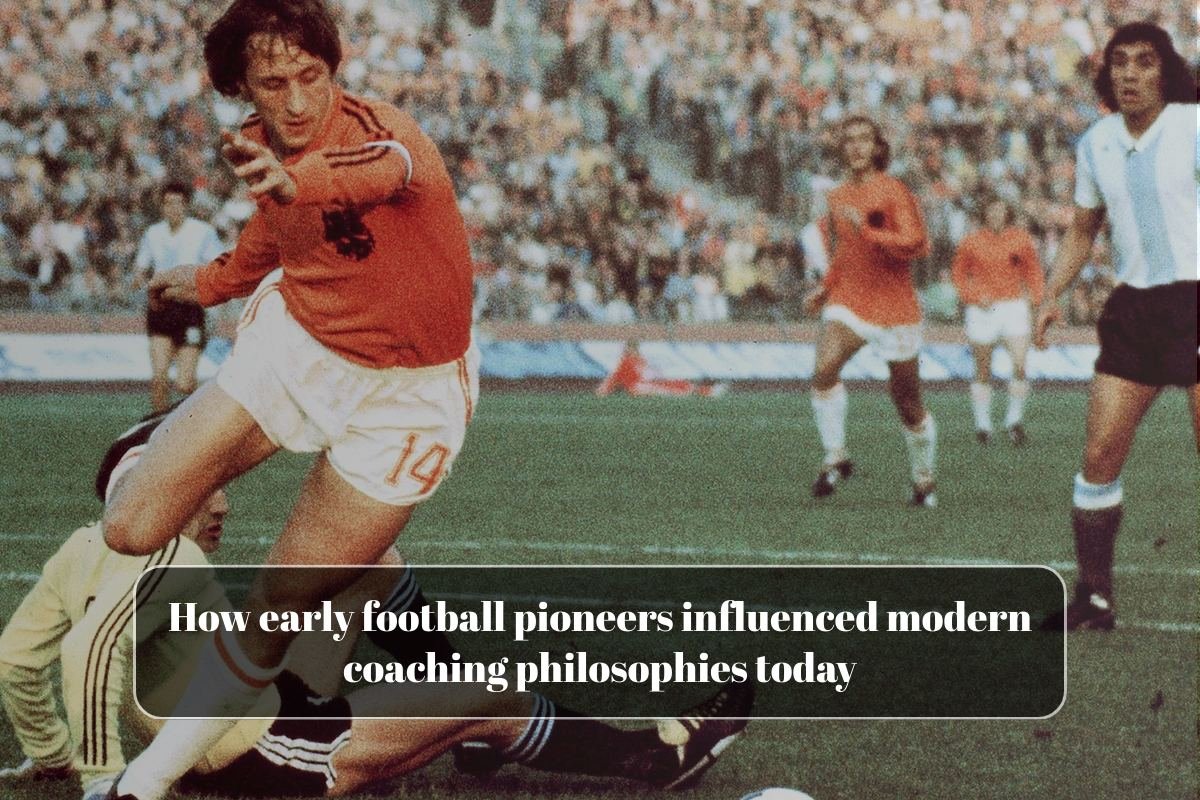
The development of modern football (soccer) as we know it today owes a great deal to the early pioneers who laid the groundwork for coaching methodologies, tactics, and philosophies that continue to shape the game.
These early innovators not only contributed to the tactical evolution of football but also helped establish the importance of physical conditioning, psychology, and strategy, elements that remain integral to coaching at all levels. From the tactical genius of early managers to the influence of scientific principles, here’s how the pioneering figures of football influenced the coaching philosophies we see today.
The Birth of Tactical Systems

One of the most significant contributions of early football pioneers was the introduction of tactical systems that revolutionized the way the game was played. In the early days of football, the game was largely chaotic with little to no formal structure. Early pioneers such as Herbert Chapman and Jimmy Hogan began to shape the tactical foundations of modern football.
- Herbert Chapman is often credited with introducing the WM formation, a tactical system that redefined defensive and attacking structures in football. Chapman’s formation, created in the 1920s while managing Arsenal, introduced a deeper defensive line, a more structured midfield, and greater fluidity in attack. His strategic use of the center-half position and wing play laid the foundation for the modern 4-4-2 and 4-3-3 formations.
- Jimmy Hogan, another early tactician, was known for introducing the concept of the “total football” philosophy, even before it became fully realized in the 1970s by the Netherlands. Hogan’s emphasis was on ball control, possession, and building from the back, ideas that continue to be central to the game today.
These tactical innovations not only influenced the way teams were set up on the field but also set the stage for how coaches think about shaping their teams’ style of play, whether through defense-focused formations or attacking philosophies.
The Influence of Physical Conditioning
Another important legacy of early football pioneers is the emphasis on physical conditioning and the role it plays in modern football coaching. In the early 20th century, football players were often seen as amateurs and were not given the same level of attention when it came to fitness and preparation. However, pioneers such as Vic Buckingham and Cesar Luis Menotti were some of the first to understand the importance of physical fitness for football players.
- Vic Buckingham, known for managing both Ajax and West Ham United, introduced scientific principles into his training methods. He was one of the first to encourage structured physical conditioning to improve stamina, strength, and agility—crucial elements for success at the highest levels of competition. His emphasis on fitness would later influence coaches like Johan Cruyff, who took this further with the creation of the renowned Total Football philosophy.
- Cesar Luis Menotti, an Argentinian coach, emphasized the balance between technical ability and physical conditioning, believing that footballers needed to be prepared both mentally and physically to perform at their peak. His influence helped elevate the physical demands of football training, which became increasingly important as the sport became more professionalized.

Today, modern football coaches place a significant emphasis on fitness, with detailed strength, conditioning, and recovery programs becoming standard practice at every level of the game. Techniques like high-intensity interval training (HIIT), strength conditioning, and monitoring player load during matches are all modern advancements that can be traced back to these early pioneers.
Psychological and Mental Conditioning
Psychological preparation is another area where early football pioneers left a lasting impact. Although sports psychology was not a widely recognized field in the early days of football, coaches like Bill Shankly and Rinus Michels began to understand that football was not only a physical game but also a mental one.
- Bill Shankly, one of the greatest managers in Liverpool’s history, introduced a revolutionary approach to team building and motivation. He saw football as a team-oriented, collective effort, emphasizing discipline, commitment, and unity. His approach to coaching extended beyond the tactical; Shankly understood the importance of instilling belief and unity within his squad, setting the foundation for team psychology in modern coaching.
- Rinus Michels, the coach behind the “Total Football” revolution, is often regarded as a pioneer in incorporating psychological elements into coaching. Michels’ belief that players should be tactically aware and flexible in their roles allowed for a more fluid and adaptable style of play. He emphasized the importance of collective intelligence, with players contributing not only physically but mentally. His ideas laid the groundwork for modern coaching psychology, where understanding player emotions, group dynamics, and mindset are considered essential for success.
Today, sports psychology is a key component of modern coaching, with specialized psychologists working alongside coaches to improve mental resilience, team cohesion, and performance under pressure.
The Evolution of the Manager’s Role

Early football pioneers also helped shape the evolving role of the coach or manager. Before the tactical revolution of the early 20th century, coaching was not as structured or professionalized as it is today. Pioneers like Jock Stein, Sir Matt Busby, and Alex Ferguson were instrumental in expanding the role of the manager from just a tactical figure to a key leader and motivator of the team.
- Jock Stein is often credited with transforming Celtic into one of the most successful teams of the 1960s and 1970s. His management style was based on creating a unified team, both tactically and psychologically, and this became a precursor to modern-day managerial philosophies that emphasize leadership, motivation, and mental preparation.
- Sir Matt Busby, the legendary Manchester United manager, was ahead of his time in focusing on the development of youth players and the importance of nurturing talent from within the club’s ranks. His influence paved the way for modern coaches like Sir Alex Ferguson, who became renowned for his ability to manage teams, not just through tactics but by understanding the mental and emotional needs of individual players.
The modern-day coach is now expected to manage not just tactics but also team dynamics, individual player psychology, and club culture. The evolution of this managerial role can be directly traced back to these early pioneers who saw the importance of leadership beyond the football pitch.
Legacy of Innovation
The contributions of early football pioneers laid the groundwork for many of the key coaching philosophies in the modern game. Their innovations in tactics, fitness, psychology, and management continue to influence football coaching at all levels, from grassroots to professional leagues. Whether it’s the tactical flexibility of Total Football, the emphasis on physical conditioning, or the psychological approach to team management, the legacy of these pioneers lives on.
Modern coaches such as Pep Guardiola, Jürgen Klopp, and Zinedine Zidane build upon the foundation set by these early pioneers, using technology, data analysis, and advanced coaching techniques to push the boundaries of the game. However, at their core, their coaching philosophies are still rooted in the principles first developed by the likes of Chapman, Shankly, and Michels.
FAQs
How did early football pioneers shape modern tactics?
Early pioneers like Herbert Chapman and Jimmy Hogan introduced tactical systems like the WM formation and emphasized ball control, possession, and flexible roles, laying the groundwork for modern formations and playing styles.
What role did physical conditioning play in early football coaching?
Early pioneers like Vic Buckingham and Cesar Luis Menotti recognized the importance of physical fitness and incorporated structured conditioning programs into their coaching, which became foundational for modern training regimens.
How did psychological conditioning impact coaching?
Pioneers like Bill Shankly and Rinus Michels began incorporating psychological preparation into coaching, focusing on team unity, mental resilience, and motivation, which are now key elements of modern football coaching.
How has the role of the manager evolved over time?
Pioneers like Jock Stein and Sir Matt Busby expanded the role of the manager from just a tactical figure to a leader and motivator, focusing on team dynamics, leadership, and individual player development, shaping the modern managerial role.