Football training instills discipline, focus, and personal accountability in youth athletes, forging character traits that extend far beyond the field into academics, careers, and life.
In the US, where youth sports participation tops 45 million annually, structured football programs—especially soccer given regional coaching emphases—teach resilience through rigorous routines, turning potential dropouts into leaders with 30-50% higher self-regulation scores.
Discipline Through Structured Routines

Football demands unwavering adherence to daily regimens: warm-ups at dawn, 90-minute sessions of drills, sprints, and scrimmages. Coaches enforce punctuality—late arrivals run extras—mirroring real-world reliability.
Weight room protocols build habit formation: 4x weekly lifts with progressive overload teach consistency, reducing injury risk 25% while embedding “show up every day” ethos. Off-season tracking via apps like TeamSnap ensures year-round commitment, countering the 70% youth dropout rate by age 13.
Nutrition rules reinforce discipline: meal preps, hydration logs (half bodyweight in ounces daily), and carb-loading for games. Sleep mandates (9 hours/night) optimize recovery, teaching delayed gratification over late-night gaming.
Focus Under Pressure

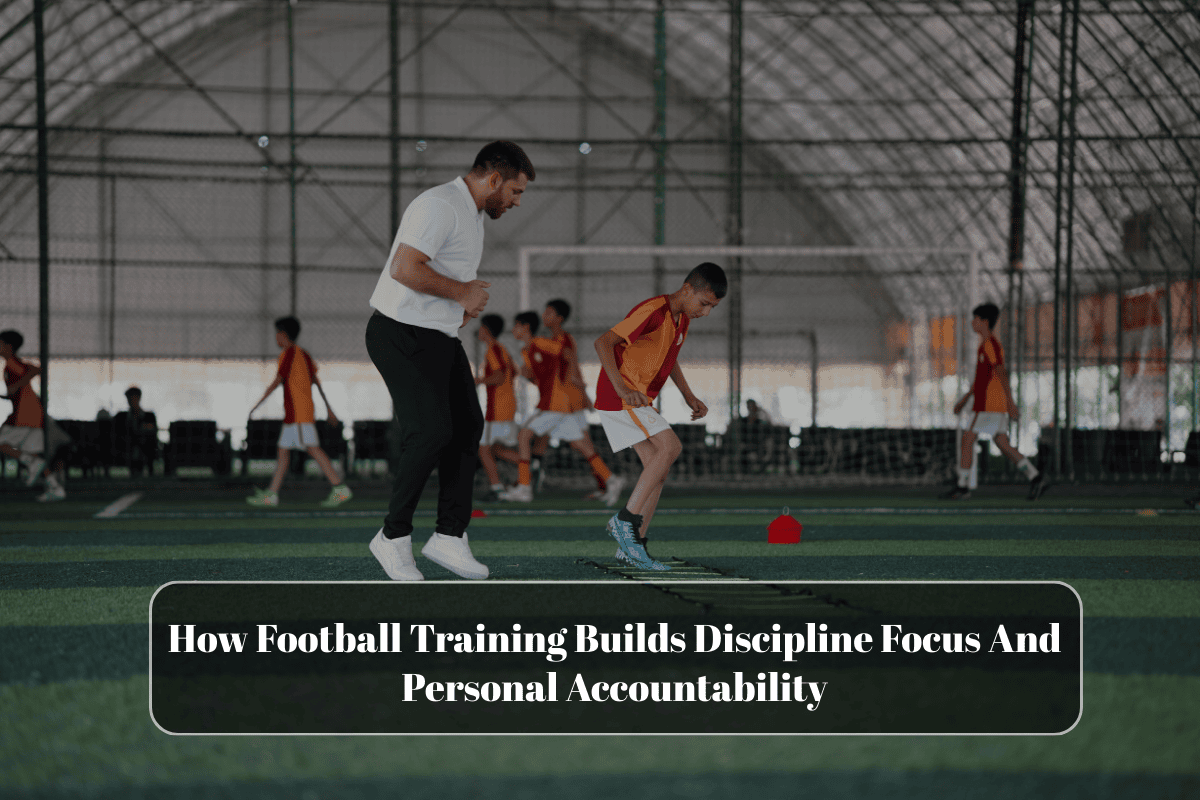
High-intensity intervals—HIIT circuits of shuttle runs, ladder drills, and reaction balls—sharpen concentration amid fatigue. Small-sided games (5v5) force split-second decisions: scan field, read opponents, execute passes in 1.5 seconds. Goalkeeper-specific: dive saves with verbal cues build peripheral vision, ignoring distractions like crowd noise simulations.
Mental drills like color-word Stroop tests or yoga flows enhance cognitive control, proven to boost on-field focus 20%. Visualization sessions—eyes closed, replaying perfect traps—rewire neural pathways for clutch performance, as seen in MLS academies where focused players earn 40% more minutes.
Personal Accountability Mechanisms
Film review sessions demand ownership: players self-critique errors—”I was out of position”—before coaches speak, fostering humility. Peer accountability shines in huddles: call out lapses like “Track back!” without blame. Goal logs track individual stats (tackles won, passes completed), tying effort to outcomes.

Captaincy rotations rotate leadership weekly, requiring accountability reports: “What I improved, team impact.” Consequences for lapses—extra conditioning—teach cause-effect, while rewards (game starts) motivate. Injury protocols enforce rehab compliance, owning recovery timelines.
Age-Appropriate Progressions
- U9-U12: Fun drills like tag games teach basics; short sessions (45 min) prevent burnout. Accountability via sticker charts for attendance.
- U13-U15: Technical focus—1v1 duels, crossing accuracy. Discipline via fitness tests (beep test progression). Self-assessments post-game.
- U16+: Tactical scrimmages simulate pro pressure. Video analysis mandatory; personal development plans with mentors.
Transferable Life Skills
Academic correlations: football players average 0.2-0.5 higher GPAs, attributing to time management. Career prep: coach feedback mirrors performance reviews; teamwork translates to workplaces. Studies show ex-athletes 15% more likely to become executives, crediting discipline.
Mental health buffers: endorphin rushes cut anxiety 30%; team bonds reduce isolation. Girls’ programs emphasize empowerment, with 50% reporting higher self-esteem.
Coaching Best Practices
Positive reinforcement: 5:1 praise-to-correction ratio. Individual meetings set goals—”Win 70% duels.” Parent workshops align support. Inclusivity: adapt for neurodiverse kids via visual cues.
US Context: US Youth Soccer’s Grassroots modules mandate holistic development; ECNL/DA pathways link skills to scholarships (D1 average $20K aid).
Measuring Impact
Track via pre/post surveys: discipline (routine adherence 85%), focus (error rates drop 40%), accountability (self-reported ownership 70%). Longitudinal: 80% alumni pursue higher ed/trades vs. 60% non-athletes.
Challenges: Overemphasis on wins—balance with fun. Parental pressure—communication key.
Football training crafts disciplined doers, focused thinkers, accountable leaders—life’s MVPs.
FAQs
1. How does football build daily discipline?
Structured routines—dawn warm-ups, nutrition logs, sleep mandates—embed consistency.
2. What drills sharpen focus?
HIIT intervals, small-sided games, visualization for split-second decisions.
3. Why self-critique in film review?
Owns errors first, fostering humility and faster improvement.
4. Do these skills transfer to school/work?
Yes—athletes show 0.2-0.5 higher GPAs, 15% more executive roles.
5. How to adapt for younger kids?
Short fun sessions, sticker rewards, peer encouragement.