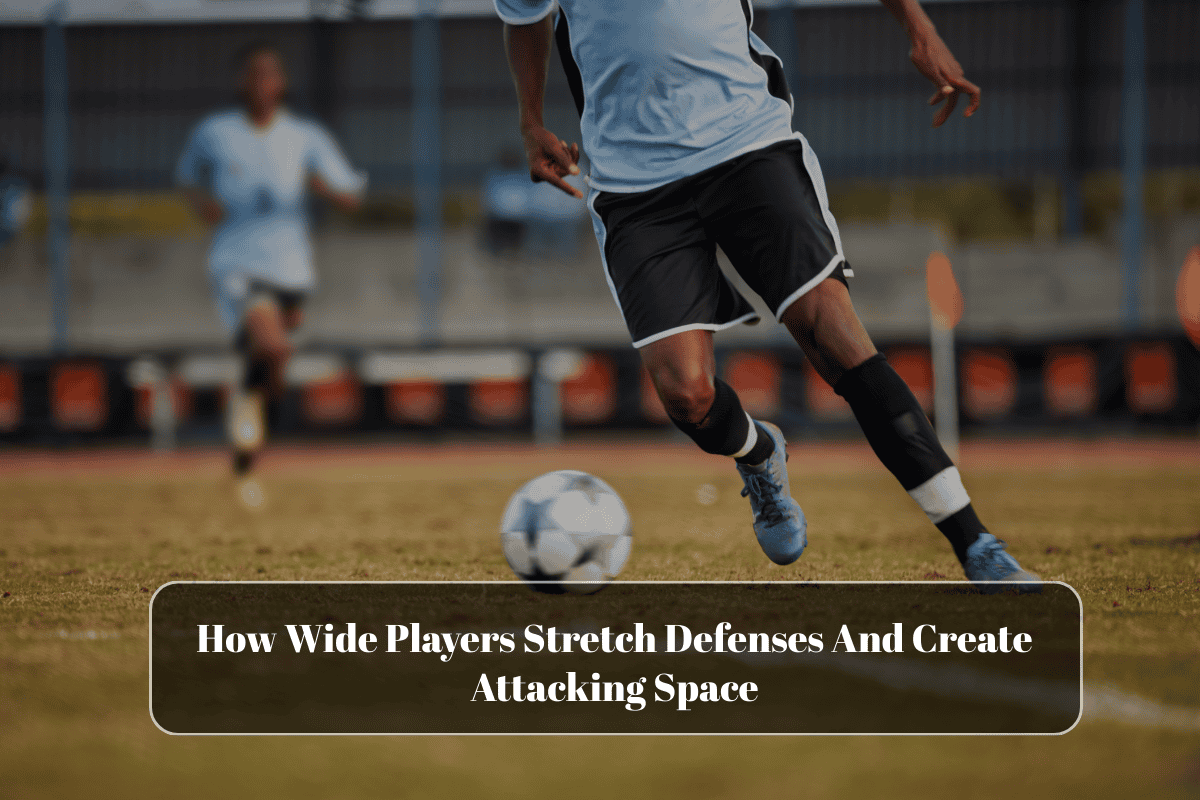
Wide players stretch defenses and create attacking space by hugging touchlines, making diagonal runs, and combining with fullbacks to drag markers wide. In U.S. soccer academies like United Soccer Academies, wingers learn to exploit flanks, pulling compact blocks apart for central overloads and cutbacks.
Principles of Width and Depth
Width spreads horizontally from sideline to sideline, forcing opponents to cover more ground—wingers stay high and wide, fullbacks overlap for depth. This duo creates staggered angles, liberating lanes for crosses or switches. Depth adds vertical layers: Wingers drop short or push behind, ensuring passing options while compact defenses compress centrally.
Young players grasp via simple cues: “Stretch like elastic!”—horizontal for width, long for depth—to dominate space.
Staying Wide to Pin Defenders
Wingers position 8-10 yards ahead of fullbacks, starting from advantageous spots to beat markers 1v1. Dribble at speed with feints, changing direction to unbalance—pass between cones simulating gaps. Opposite winger attacks far post on crosses, fullback covers inside, maintaining balance. This pins fullbacks, creating central space for No. 10s.
Overlaps, Underlaps, and Combinations
Fullback overlaps wide while winger cuts inside, or underlap reverses roles for penetration. Drills like 60×50 yard games limit central defenders, forcing flank focus—winger receives, fullback times run for cutbacks or low crosses. 3v2 overloads teach exploitation: Dribble to fix defender, release runner.
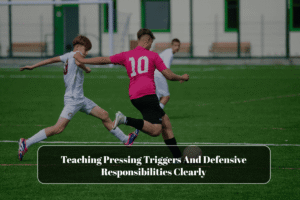
Horizontal movement clears wide lanes: Central players shift out, wingers in, curving runs to face opponents.
Drills for Space Creation
Warm-ups: Dribble-feint-pass grids build first-touch aggression. Progress to SSGs (small-sided games) with wide zones—score via gates or far-post finishes, no defenders until first touch. Double rondos train movement: Stretch wide/long off-ball. Shadow play rehearses patterns without opposition; 4v4+neutrals adds pressure.
Power Soccer USA stresses far-wing options: Stay wide to stretch, overlap for chaos.
Tactical Reading and Execution
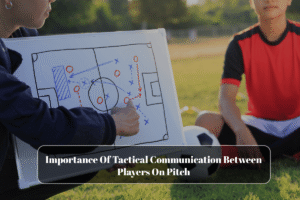
Read triggers: Compact midfield? Go wide high. Pressing fullback? Dribble inside for overlap. Video of pros like Salah dissects timing—second-post runs, cutbacks. GPS tracks positioning, rewarding space occupation.
Methods Comparison
U.S. training refines these for MLS Next dominance.
Frequently Asked Questions
Q. How do wingers initially stretch defenses?
Hug touchlines high/wide, forcing coverage from sideline to center.
Q. What distinguishes overlap from underlap?
Overlap: Fullback goes outside winger; underlap: Inside for penetration.
Q. Best drill for combinations?
Flank 2v2 or 3v2 overloads for angles, crosses, cutbacks.
Q. Role of opposite winger?
Attack far post on crosses, fullback covers inside.
Q. How to read when to go wide?
Compact center? Exploit flanks; track via video/GPS feedback.