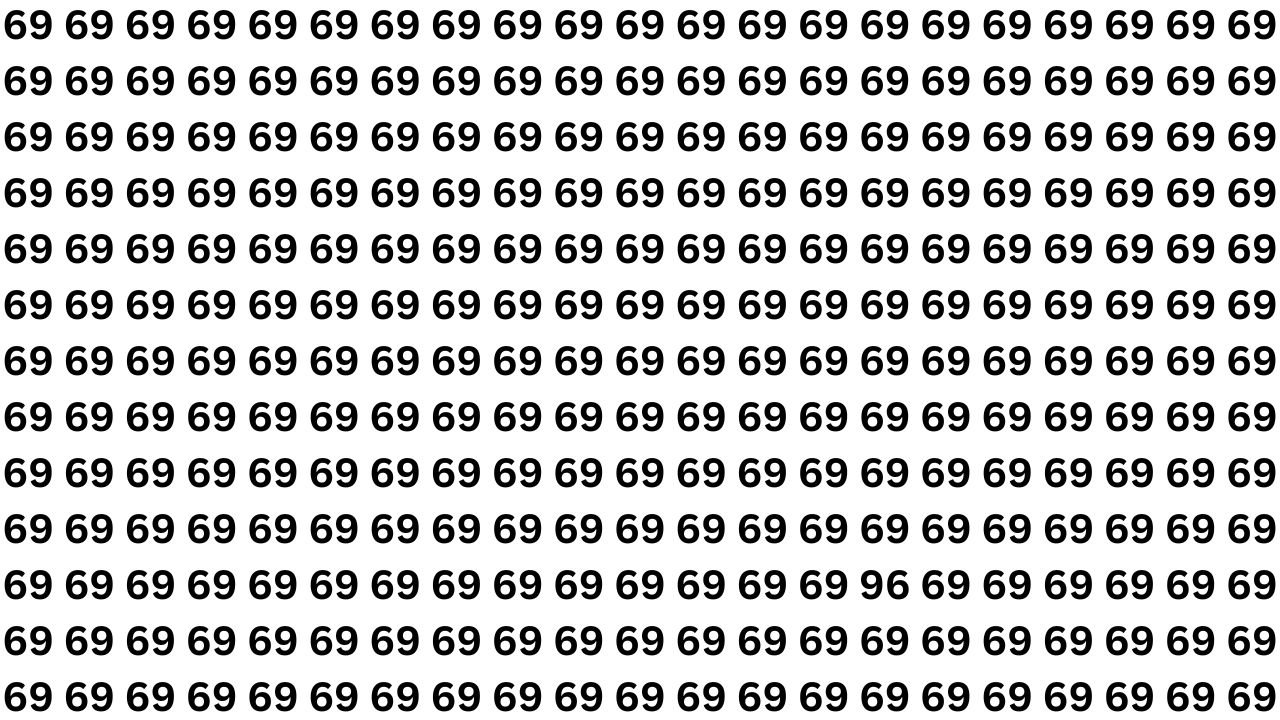
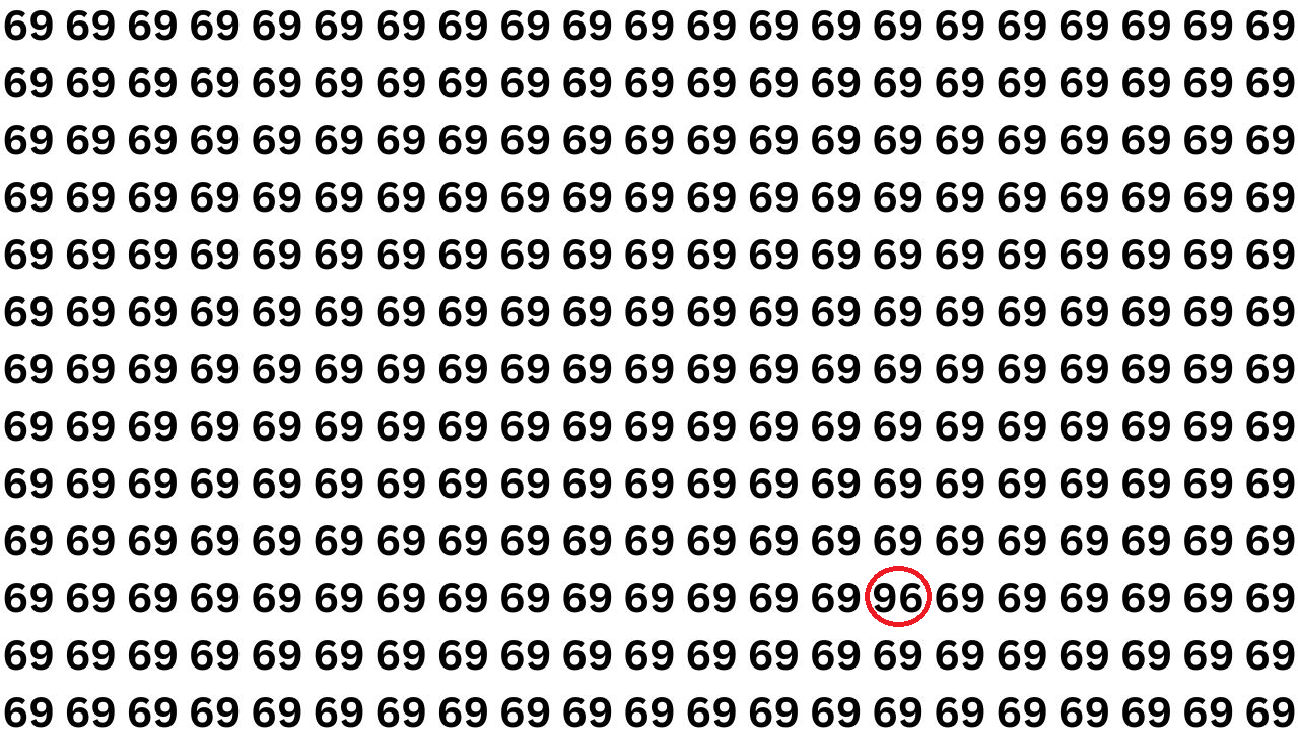
Optical illusions are an entertaining way to test how your brain processes what you see. This puzzle asks you to find the number “96” hidden among the many “69s” scattered throughout the image.
The catch is that you have only 9 seconds to locate it. This exercise does more than just test your vision; it also provides an enjoyable way to assess your concentration and how quickly your mind can process information.
Why Are Optical Illusion Challenges So Popular?
Optical illusions have captivated people for many years because they trick our brains in novel ways. Our eyes transmit information to our brain, but the brain sometimes interprets these signals incorrectly, resulting in surprising images.
The challenge we’re sharing today can help you improve your thinking skills by training your brain to recognize patterns and unusual details faster. These puzzles also improve your memory and focus while providing a fun mental exercise.
How Can You Spot the Hidden 96 Among 69s in Just 9 Seconds?
visual puzzle takes advantage of the similarity between these two numbers, which appear nearly identical and are essentially flipped versions of one another. This makes it difficult to tell the difference at first glance. To solve this puzzle efficiently, you must focus on small details and examine the image in an organized manner.
Look for places where “96” may differ from the surrounding numbers. It could have slightly different spacing or positioning, or the digits may be oriented differently than the rest.
When you begin searching it helps to concentrate on one specific area of the puzzle at a time. Avoid trying to scan the whole grid quickly because dividing the puzzle into smaller sections will improve your ability to locate the hidden number faster.
Solution
If you’re still searching for the number “96,” you can find it in the photo below.
Why Are Observation Challenges So Engaging?
These challenges are both entertaining and beneficial to your cognitive abilities. When you work on observation tasks, your brain learns to look beyond what is obvious and pay attention to minor details that may appear insignificant.
This practice improves your ability to understand visual information and identify patterns or objects that appear out of place in complex images. People enjoy these puzzles because finding the hidden object gives them a sense of accomplishment. The competitive aspect also adds to the enjoyment because you can try to beat your personal record or compete against friends.
The Science Behind Optical Illusions
Optical illusions are interesting tricks where what you see differs from what is actually there. They work by fooling your brain into reading visual information incorrectly.
When you look at our optical illusion containing the numbers 69 and 96 your brain tries to see them as reflections of each other which creates confusion. This makes spotting the hidden number harder because your mind searches for a pattern that is not really present in the way you think it should be.
How Can You Improve Your Ability to Spot Hidden Objects?
Getting better at finding hidden objects is like any other skill and requires consistent practice. Spending more time with optical illusions naturally improves your ability to see small differences between objects or numbers.
Here are some ways to sharpen your observational skills: Work with a variety of optical illusions: When you practice more, your brain becomes faster at reading these images. Keep trying new challenges to keep your mind sharp and interested.
Improve your concentration. Make an effort to focus solely on what you’re doing. Your ability to notice small details improves over time, allowing you to find objects that blend into their surroundings. Take your time: Sometimes it is difficult to locate the hidden object.
Avoid rushing through the puzzle and instead examine the image carefully & systematically. Search for Small Variations: The numbers might appear almost identical but there are usually tiny visual hints that make one number different from the others.