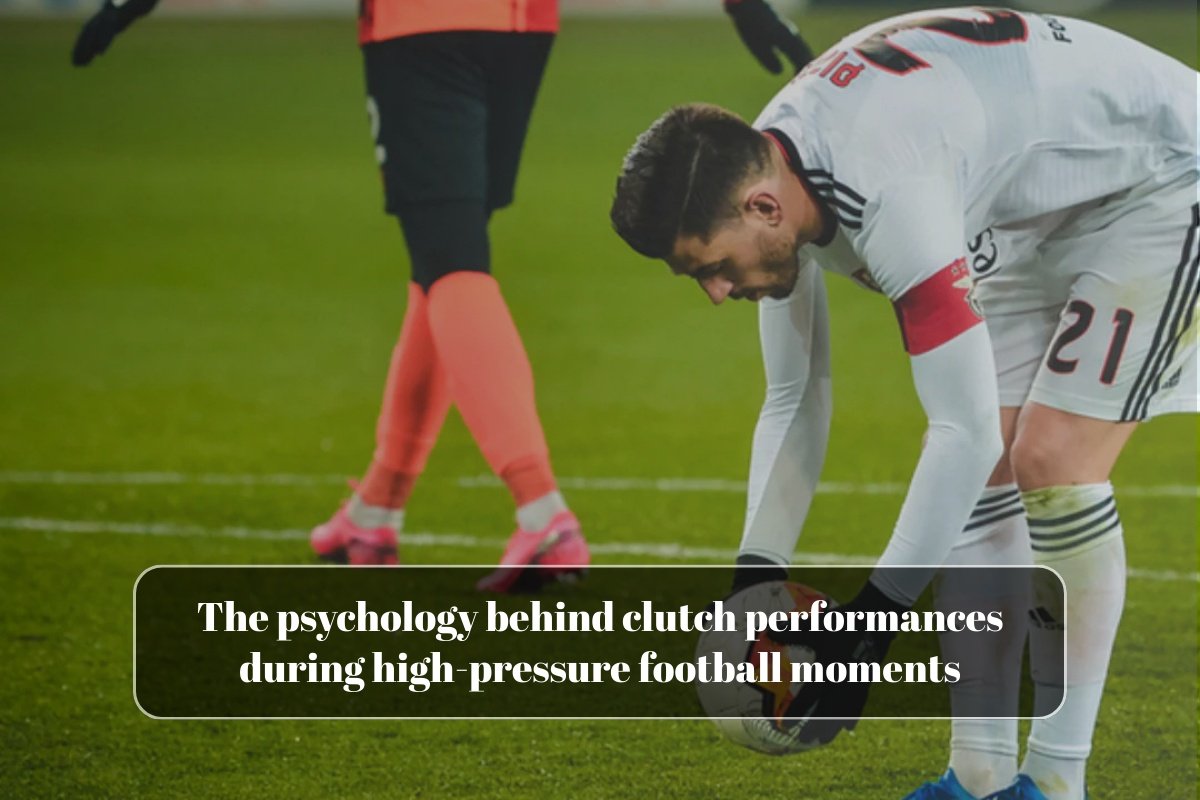
In football, the difference between glory and heartbreak often unfolds in seconds. A last-minute penalty, a decisive free kick, or a crucial defensive clearance can define careers and club legacies. While technical ability and physical conditioning are vital, psychology frequently determines who thrives under pressure and who falters. Clutch performances are less about talent and more about mental mastery.
Understanding “Clutch” in Football
A clutch performance refers to delivering exceptional results in high-stakes situations. Think of dramatic goals in major finals or decisive penalty shootouts in tournaments like the FIFA World Cup or the UEFA Champions League.
Clutch athletes share specific psychological traits:
- Emotional regulation
- High self-confidence
- Present-moment focus
- Resilience after setbacks
These traits allow players to perform at — or above — their normal level when pressure intensifies.
The Science of Pressure and Performance
Sports psychology often references the Yerkes-Dodson Law, which explains that performance increases with physiological or mental arousal — but only up to a point. Too little arousal leads to underperformance; too much causes anxiety and errors.
| Arousal Level | Psychological State | Performance Outcome |
|---|---|---|
| Low | Lack of urgency | Flat performance |
| Optimal | Focused intensity | Peak performance |
| High | Anxiety and tension | Mistakes increase |
Elite footballers learn to stay within the optimal zone, balancing adrenaline with composure.
Confidence Built Through Repetition
Clutch players rely on deeply ingrained habits. Repetition creates automatic responses, reducing overthinking during critical moments.
For example:
- Practicing penalties under simulated crowd noise
- Rehearsing last-minute tactical scenarios
- Visualizing match-winning moments

This mental rehearsal strengthens neural pathways, making high-pressure situations feel familiar rather than overwhelming.
Emotional Regulation and Cognitive Control
Emotional control separates clutch performers from those who “choke.” Techniques used by elite players include:
- Controlled breathing
- Positive self-talk
- Pre-performance routines
- Visualization exercises
When players focus on process rather than outcome, anxiety decreases. Instead of thinking, “If I miss, we lose,” they concentrate on technique and execution.
The Role of Experience
Experience plays a powerful role in clutch psychology. Players repeatedly exposed to high-pressure games develop:
- Familiarity with crowd intensity
- Tolerance for media scrutiny
- Adaptation to tactical unpredictability
Clubs like Real Madrid CF have historically displayed composure in late-stage European matches, demonstrating how collective experience shapes psychological resilience.
Team Dynamics and Collective Belief
Clutch moments are rarely individual phenomena. Team cohesion amplifies confidence. When players trust teammates:
- Decision-making becomes quicker
- Risk-taking becomes calculated
- Panic is minimized
Collective belief can shift momentum dramatically. A team convinced of its ability to score late often maintains attacking intensity rather than resorting to desperation.
Why Some Players Choke
Choking occurs when pressure disrupts automatic skill execution. Common psychological triggers include:
- Fear of failure
- Over-analysis of technique
- Negative past experiences
- External expectations
When conscious thought interferes with automatic movement, timing and coordination suffer.
Key Psychological Traits of Clutch Footballers
- High intrinsic motivation
- Growth mindset
- Emotional intelligence
- Strong concentration under distraction
- Acceptance of pressure as opportunity
These traits are cultivated through mental training, not just natural disposition.
Long-Term Psychological Conditioning
Modern elite clubs integrate sports psychologists into their performance teams. Mental training is now considered as essential as tactical drills or strength conditioning.
Structured psychological programs include:
- Match-pressure simulations
- Stress inoculation training
- Mindfulness practice
- Post-match reflective analysis
By normalizing high-pressure exposure, clubs reduce emotional volatility in decisive moments.
FAQs
Q. What makes a footballer clutch?
Clutch footballers maintain emotional control, confidence, and focus during high-pressure situations.
Q. Is clutch ability natural or trained?
While some players have natural composure, mental resilience can be developed through structured psychological training.
Q. Why do players choke under pressure?
Choking often results from anxiety, fear of failure, and overthinking technique during critical moments.
Q. Do teams train for high-pressure moments?
Yes. Elite clubs simulate pressure scenarios and incorporate sports psychology to prepare players for decisive situations.