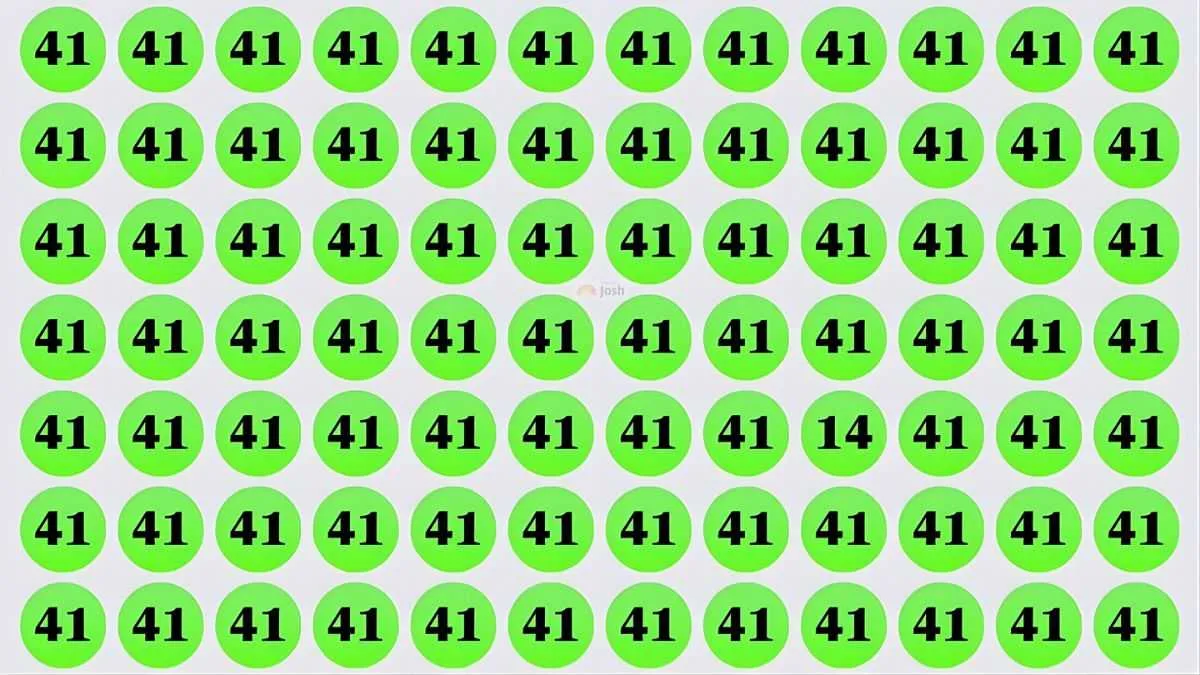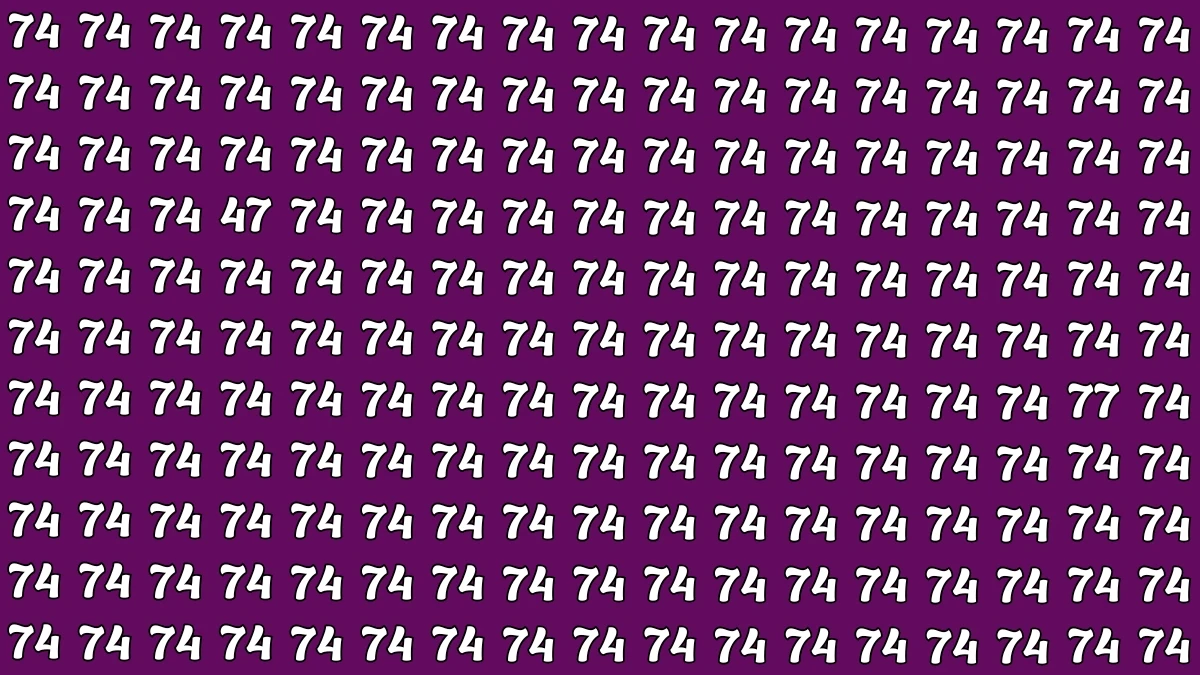
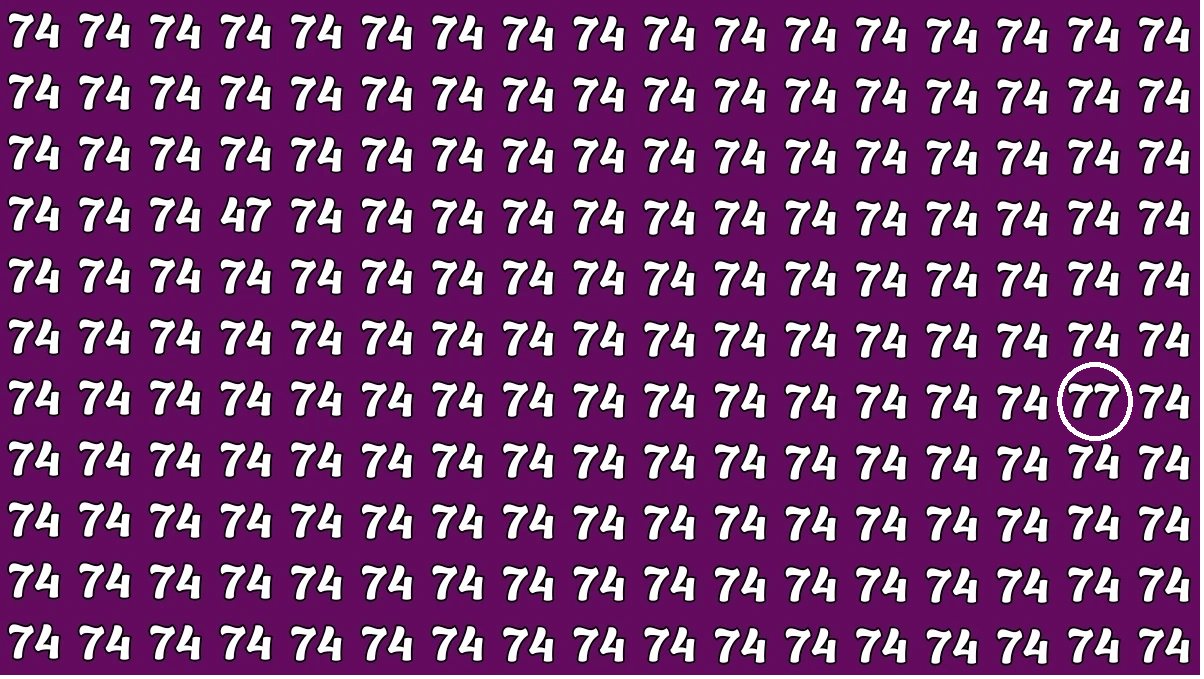
Optical illusion challenges are a fun way to see how sharp your vision really is. At first glance, every piece of this puzzle appears to be identical. The grid is filled with the number 74 repeated multiple times. However, two sneaky numbers, 77 and 47, are hidden somewhere inside. Your task is straightforward but tricky. Can you find both of them before time runs out?
These puzzles aren’t just about sight. They force your brain to process patterns quickly and detect subtle differences. Many people scan the grid confidently, only to discover that they missed what was right in front of them. That’s what makes this challenge both satisfying and frustrating.
Why does this optical illusion feel so difficult?

The difficulty arises from pattern repetition. When the brain sees the number 74 repeated in neat rows, it begins to automatically process the image. Your mind assumes everything is the same and stops actively checking each number. This mental shortcut saves time in everyday situations but works against you in puzzles like this.
The digits in 77 and 47 resemble 74, especially when viewed quickly. The brain fills in the gaps and reads what it expects to see rather than what is actually present. The tiny switch between a 4 and a 7 is what gives the illusion its power.
How to approach the challenge effectively
Most people fail because they rushed. Speed can actually make the puzzle more difficult. Instead of scanning row by row, consider breaking the pattern. Concentrate only on the second digit of each number, as this is where the difference is most obvious.
Another useful trick is to adjust your viewing distance. Move slightly closer to or away from the screen. Even tilting your head or squinting slightly can help your brain re-register the shapes rather than relying on habit.
Some players prefer to scan diagonally instead of left to right. This forces your brain to slow down and look at each number individually.
Where are the hidden numbers usually located?
In most versions of this challenge, the hidden numbers are located away from the center. The human eye naturally focuses on the middle, so designers place odd numbers near corners or along edges.
Don’t assume they’ll be side by side. 77 and 47 are frequently separated to make the task more difficult. One may sit quietly in the upper half, while the other blends into the lower rows.
If you still can’t find them, take a deep breath and reset your vision. A few seconds of rest can make a significant difference.
Solution
If you’re still searching for the number “77,” you can find it in the photo below.
What spotting both numbers says about your brain
Finding both 77 and 47 demonstrates strong visual discrimination abilities. It means your brain can withstand pattern fatigue and detect subtle differences under pressure. This ability is associated with attention to detail and quick decision-making.
People who enjoy these puzzles tend to do well in activities that require concentration, such as problem solving, design work, or strategy games. Even if you missed the numbers, practice improves these abilities over time.
Optical illusions function as mini mental workouts. The more you solve, the more precise your perception becomes.
Should you time yourself or take it slow?
Both approaches have value. Timing yourself adds excitement and trains quick recognition. Taking it slow helps build accuracy and confidence. A good balance is to try once under time pressure, then repeat without a clock to fully understand where your eyes struggled.
Sharing the puzzle with friends or family can also make it more fun. Everyone spots things differently, and comparing approaches often reveals new strategies.
Final thoughts before you check the answers
Congratulations if you found both numbers quickly. If not, don’t worry. These illusions are intended to deceive even the sharpest eyes. The joy lies in the challenge, not the outcome. Take another look and see if your brain detects anything new this time.