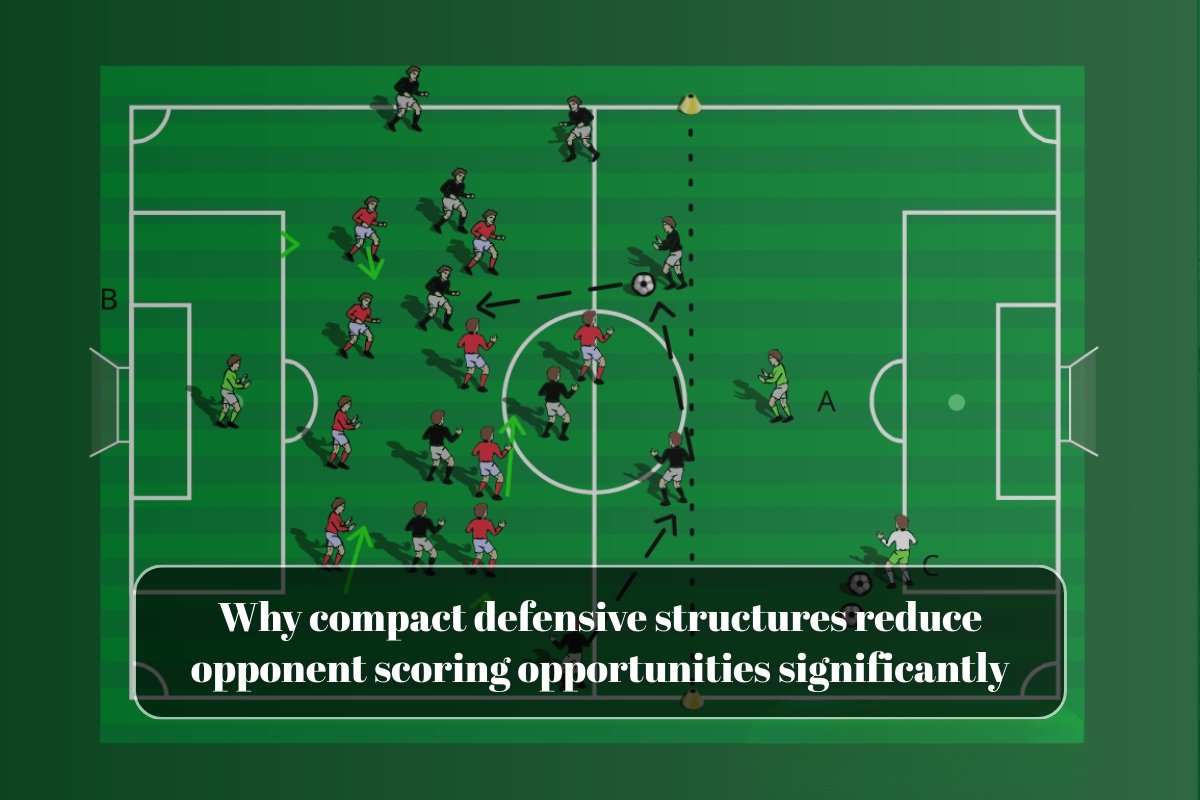
In competitive sports—particularly team sports like football (soccer), hockey, and basketball—defensive organisation is often the difference between consistent success and repeated breakdowns. Among the most effective defensive approaches is the use of compact defensive structures. By reducing space, compressing passing lanes, and maintaining collective discipline, compact defenses significantly limit an opponent’s ability to create and convert scoring chances.
Limiting Space in High-Value Areas
Scoring opportunities are most dangerous when attackers receive the ball in central, high-value zones close to goal. Compact defensive structures deliberately shrink these spaces by keeping defensive lines close together vertically and horizontally.

When defenders stay connected, attackers are forced wide or backward, away from areas where shots and decisive passes are most effective. This spatial restriction lowers shot quality and reduces the likelihood of clear goal-scoring chances.
Disrupting Passing Lanes and Combinations
Attacking play relies heavily on passing rhythm, movement, and quick combinations. Compact defensive setups crowd passing lanes, making it harder for opponents to play through the defense.
With minimal gaps between defenders, attackers face constant pressure and fewer clean passing options. This leads to slower ball circulation, predictable play, and an increased likelihood of intercepted passes or forced turnovers.
Forcing Low-Percentage Attacking Decisions
When space is limited, attackers are often pushed into taking lower-quality actions. These may include long-range shots, crosses from deep or wide areas, or speculative passes under pressure.
Compact defenses are designed to accept these outcomes. While such actions may still result in attempts on goal, they statistically carry a much lower chance of success than shots or passes made from central, unmarked positions.
Enhancing Defensive Support and Cover
A compact structure ensures defenders are close enough to support one another. If one player steps out to press, others are immediately available to cover space behind or beside them.

This collective proximity reduces the risk of individual defensive errors becoming goal-scoring opportunities. Even if an attacker beats a defender, the next line of defense is usually within reach, limiting progression toward goal.
Improving Defensive Transitions
Compact teams are better positioned to react when possession is lost or regained. When defenders are already close together, it is easier to counter-press immediately after losing the ball or to drop into shape quickly if pressure is broken.
This rapid defensive transition prevents opponents from exploiting moments of disorganisation, which are often when the most dangerous scoring chances occur.
Reducing One-on-One Exposure Near Goal
Isolated one-on-one situations near goal heavily favor attackers. Compact defenses minimize these scenarios by ensuring numerical superiority around the ball.
By crowding attacking zones, defenders can double-team key players, block shooting angles, and delay attacks until help arrives. This collective approach significantly lowers the probability of clean finishes.
Increasing Psychological Pressure on Attackers
Beyond physical positioning, compact defending creates psychological pressure. Attackers feel constantly surrounded, rushed, and constrained. Over time, this pressure can lead to frustration, rushed decisions, and loss of confidence.
As attacking efficiency drops, scoring opportunities decline—not only because of tactical limitations, but also due to the mental strain imposed by a disciplined defensive block.
Balancing Compactness With Awareness
While compactness is highly effective, it must be paired with awareness and communication. Over-compact defenses risk vulnerability to quick switches of play or long-range threats if not well-coordinated.
When executed correctly, however, compact defensive structures strike an ideal balance—denying space, controlling danger zones, and forcing opponents into inefficient attacking patterns.
FAQs
What does a compact defensive structure mean?
It refers to a team staying close together horizontally and vertically to reduce space for opponents, especially in dangerous areas.
Why does reducing space lower scoring chances?
Less space limits shooting angles, passing options, and time on the ball, forcing attackers into lower-quality attempts.
Do compact defenses encourage opponents to play wide?
Yes. Compact teams often allow wide play because crosses and long shots are statistically less dangerous than central attacks.
Can compact defending work against highly skilled attackers?
Yes, especially as a team approach. Collective positioning and support reduce the effectiveness of individual skill.
What is the main risk of playing too compact?
Poor coordination can leave teams vulnerable to quick switches of play or long-range shots, making communication and awareness essential.